

Solid Wood Dining Table Singapore: How to Choose the Right One
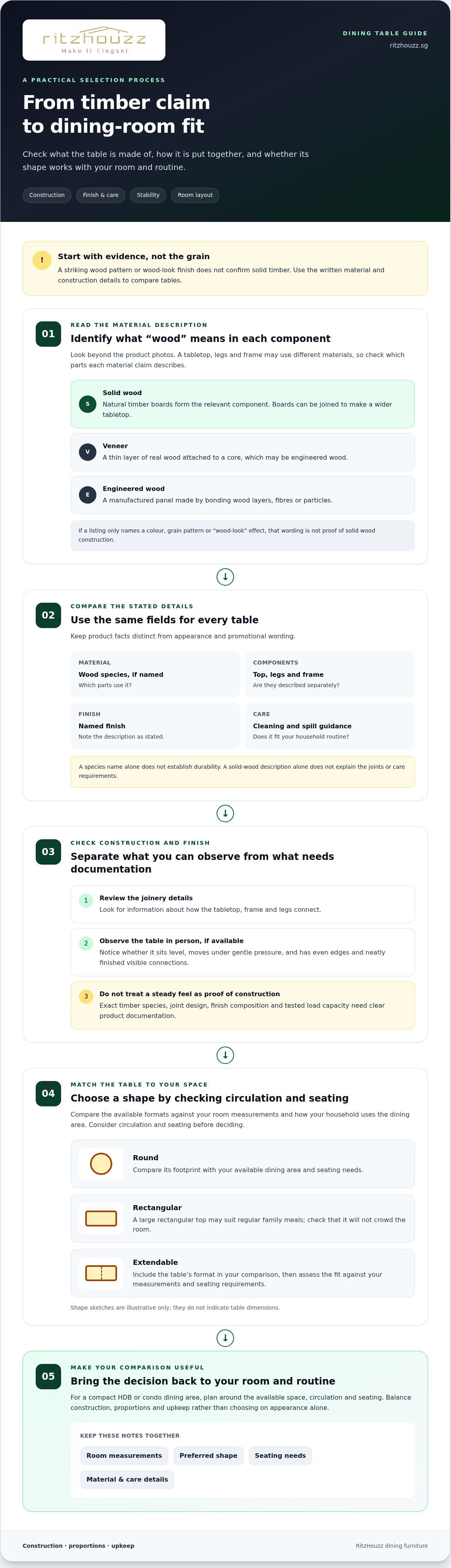
A striking wood grain doesn’t tell you how a dining table is built. When choosing a solid wood dining table in Singapore, consider whether its construction suits your room and how you plan to use it. Product listings can make solid timber difficult to distinguish from veneer or other wood-based construction, so the details beneath the finish matter.
It’s also worth considering whether a table will crowd a compact HDB or condo dining area, and how its care needs fit a warm, humid home. A good choice balances construction, proportions and upkeep, rather than relying on appearance alone.
This guide explains how to assess solid wood, compare round, rectangular and extendable shapes, and match a table to your layout and dining habits. RitzHouzz offers dining table sets with chairs, including round, rectangular and extendable formats. Before making an enquiry, note your room measurements, preferred shape and seating needs. For any table you’re considering, check its product details to understand the materials used.
Key Takeaways
- For a solid wood dining table in Singapore, check the written material and construction details rather than judging by the grain alone.
- Review the finish, joinery, stability and care instructions to better understand a table’s suitability.
- Compare solid wood, veneer and engineered wood by their stated construction, appearance and care needs.
- Plan around circulation and seating before choosing a round, rectangular or extendable table.
- Explore RitzHouzz dining tables and sets with your room measurements and seating requirements in mind.
What does solid wood mean in a dining table?
A solid wood dining table uses natural timber boards as the material of its components, rather than applying a thin wood layer over a manufactured core. Boards may be joined to create a wider tabletop, so “solid wood” doesn’t necessarily mean the entire surface comes from one uninterrupted piece of timber. In brief, solid wood is timber used as the substance of a table component, not merely as a decorative surface over another material.
That distinction is useful, but it doesn’t tell you everything about a table’s performance or suitability. Wood species, finish and construction are separate factors. A species name alone doesn’t establish durability, and a solid wood description doesn’t explain how the joints are made or how the table should be cared for. Consider the shape and your household’s routines too: a large rectangular top may suit regular family meals, while another footprint may fit a compact dining zone better.
Solid wood, veneer, and engineered wood: what is the difference?
Solid wood uses timber throughout the relevant component. Veneer is a thin layer of real wood attached to a core, which may be engineered wood. Engineered wood is made by bonding wood layers, fibres or particles into a manufactured panel. These terms describe different constructions, not interchangeable finishes. For a concise overview, see What is solid wood?
Read material descriptions component by component. A tabletop may be described as solid wood while the legs, frame or other parts use different materials. A “wood-look” finish describes appearance, not necessarily natural timber. If a listing names only a colour, grain pattern or effect, don’t treat that wording as proof of solid wood construction.
What to look for in a product description
Separate what the listing states from what its photographs suggest. Check whether a material claim applies to the whole table, the tabletop only or selected components. Look for the named wood species, if provided, and review the finish and care guidance before comparing options. A glossy surface or convincing grain can’t establish the material beneath it.
Use these questions to compare product descriptions:
- Which parts are specifically described as solid wood?
- Does the description identify veneer, engineered wood or a wood-look surface?
- What finish is stated, and what cleaning or care guidance accompanies it?
- Are the tabletop and supporting structure described separately?
This approach helps you assess a solid wood dining table listing in Singapore by its stated construction, not just its styling. Keep material, finish and build details distinct in your comparison, then consider whether the table’s shape and construction suit the way your household uses the dining area.
How to assess solid wood quality beyond the grain
A striking grain can make a table memorable, but it doesn’t show how the table is assembled or whether its finish suits daily use. Compare details that photographs can’t establish, and look for equivalent information across listings instead of relying on styling or broad quality claims.
A clear materials description makes comparisons more useful because it shows which components, finishes and care requirements you’re weighing. When comparing solid wood dining tables in Singapore, use this checklist to distinguish stated details from what you can observe:
- Material: Note the stated wood species and which parts of the table use it.
- Finish: Record the named finish and any care guidance. Don’t assume terms such as “premium” or “natural” indicate particular performance.
- Joinery: Review available details about how the tabletop, frame and legs connect.
- Stability: Check whether the table sits evenly and feels steady during normal, gentle use.
- Care: Consider whether the instructions fit your household’s routines, including how you clean the surface and manage spills.
Which details help you compare materials and finish?
Build a simple comparison using the same fields for each table: wood species, tabletop material, leg and frame materials, finish description and care instructions. If one listing names timber for the top but says little about the base, keep that distinction visible in your notes. Compare the details provided. Colour, grain pattern and promotional wording don’t establish material or finish properties.
How can you assess stability and workmanship?
Product information may describe assembly or visible joints, but an in-person inspection also has limits. Observe whether the table sits level, moves under gentle pressure, and has even edges and neatly finished visible connections. A stable feel is useful to note, but it doesn’t prove the materials or internal construction.
Keep your observations separate from claims that require product information. You can note a visible gap or uneven finish, but details such as the exact timber species, joint design, finish composition or tested load capacity need clear documentation. This prevents a polished appearance or a quick inspection from standing in for evidence about construction.
Before deciding, compare tables with similar material descriptions and care expectations, then consider which details matter most to your household. To discuss dining furniture options, share your room measurements and seating needs through a dining furniture enquiry.
Solid wood dining tables versus other materials: which suits you?
No single material suits every household. Solid wood, veneer and engineered wood can differ in appearance, composition and care needs. Compare the stated construction and finish against your routines rather than choosing by category alone.
The table below is a starting point, not a performance guarantee. A table’s behaviour depends on its construction, finish and maker’s guidance, so product-specific details matter more than broad assumptions about a material.
| Material | Appearance | What to check | Care and suitability |
|---|---|---|---|
| Solid wood | Natural grain and colour can vary between boards and pieces. | Which components use timber, the stated species, finish and construction. | Follow the finish-specific care guidance. Consider it if you value natural variation and are comfortable with the stated upkeep. |
| Veneer | A real-wood surface layer can provide a timber appearance over a different core. | Which parts are veneered, what the core is, and how the surface is finished. | Care depends on the veneer and finish. It may suit a preference for a more consistent surface, depending on the design. |
| Engineered wood | Often offers a more uniform manufactured surface, which may have a wood-look finish. | The panel construction, surface material and finish description. | Follow the product’s care instructions. Suitability depends on the specific construction and household use. |
What trade-offs should you weigh?
Natural timber often shows variation in grain and tone, while veneer or engineered panels may have a more consistent appearance. Neither preference is inherently better. Compare the actual material and finish descriptions, then consider how visible marks, spills and routine cleaning fit your household. Don’t infer scratch, stain or heat resistance from a material label or promotional wording alone.
Does solid wood suit a warm, humid home?
Wood responds to moisture in the surrounding air by absorbing and releasing it. Changes in moisture can affect its dimensions. In Singapore, humidity is a practical consideration, not an automatic reason to rule out solid wood. Check the maker’s care guidance for the specific table and finish, rather than applying a general treatment or cleaning routine.
When comparing solid wood dining tables in Singapore, weigh the look you prefer against the care instructions you can follow consistently. A clear finish description and the maker’s guidance are more useful than assumptions about how any material will perform over time.
How to choose a solid wood dining table for a Singapore home
Start with the room, not the catalogue. A table that suits an HDB, BTO or resale-flat dining area may feel out of proportion in a condominium layout. Even if it fits the floor plan, it may be difficult to move into the home. Check the space, your routines and the table format before deciding.
- Measure the dining zone. Note the usable length and width, including nearby walls, counters, doors and fixed furniture. Mark the table footprint on a floor plan or use removable tape on the floor to judge its scale.
- Map circulation. Allow space to pull out chairs and walk around them. Check the route between the dining area and adjoining spaces, not just the gap beside one chair.
- Set your seating needs. Consider who uses the table on an ordinary day, whether chairs need to stay in place, and how often you host extra diners. Include chair width and movement in your plan. The tabletop dimensions alone don’t show the full space needed for use.
- Compare shapes and formats. Once you know the usable area and seating needs, assess round, rectangular and extendable options. Check both the everyday footprint and, for an extendable design, the expanded footprint against your floor plan.
Round, rectangular, or extendable: which shape fits your layout?
A round table may make a compact or awkward dining zone easier to move through, while a rectangular shape may fit naturally in a long, narrow area. Shape can also affect how diners face one another and how the table relates to a nearby wall or walkway. An extendable format may suit occasional hosting, but plan for its full open size, not just its everyday footprint.
What should you measure before making a decision?
Measure the table footprint, the space occupied by chairs when pulled out, and the access route from the home’s entrance to the dining area. For a larger table, check corridor turns, door openings and lift access too. In flats and condominiums, the route into the home may be tighter than the room itself.
- Record the dining area’s usable length and width, not just the room’s overall dimensions.
- Mark chair positions and walking paths on the floor plan.
- Note nearby doors, storage, counters and furniture that affect movement.
- Compare the fixed and expanded footprint before choosing an extendable table.
Before choosing a solid wood dining table for your Singapore home, check the plan against your daily routines and access route. Share your room measurements and seating needs through a dining furniture enquiry to discuss table formats that suit your space.
Explore dining furniture with RitzHouzz
A dining table’s shape and overall presence influence how the dining area relates to the rest of your home. RitzHouzz offers dining table sets with chairs, including extendable, round and rectangular formats. Consider which style works with your existing furniture and the character you want the space to have. Check the product details for the materials used in any specific table you’re considering.
When comparing solid wood dining tables in Singapore, assess the material information for each product rather than inferring construction from appearance. Shape and styling can help you narrow your options, while product details explain what each table is made from.
Match the table format to your household
A dining set with chairs offers a coordinated starting point for furnishing the area. Round and rectangular tables create different visual profiles, while an extendable format can provide flexibility for changing occasions. Think about the atmosphere you want during everyday meals and how the dining area connects with the living space. These preferences can help narrow the format before you compare individual options.
Make your dining furniture enquiry more useful
Alongside your preferred format, describe the look you’re drawn to and any existing furniture or interior details you’d like the dining area to complement. You could also explain what feels unresolved, such as whether the table should make a quieter impression or become a focal point. These preferences can help shape a focused discussion, including through RitzHouzz’s interior design and space-planning services.
For broader design inspiration, consider how a table’s profile relates to the wider room, while keeping style preferences separate from product-specific material information. Knowing the look you want makes it easier to weigh dining furniture options thoughtfully.
Discuss your dining furniture requirements with RitzHouzz and explore the options in the context of your home. Bring your room measurements and seating needs to make the conversation more specific.
Plan a dining space that feels considered
A dining area takes shape through practical choices: how the table relates to nearby furnishings, where shared meals happen, and the atmosphere you want to create. Let those priorities guide your decision so the table suits the way you live, not just the way it looks.
Before moving ahead, consider what you want the space to accommodate, from weekday dinners to gatherings. Combine that with your room measurements and preferred table format to create a clear starting point for choosing dining furniture.
Start a conversation about your dining area with RitzHouzz. Share your measurements and requirements to discuss dining furniture for your home.
Frequently Asked Questions
How can I tell whether a dining table is solid wood?
Check the written product specifications rather than relying on a photograph. Look for a component-by-component material description and note whether it applies to the top, legs and frame. If you’re comparing models, save each description so the details are easy to compare. A precise breakdown is more useful than a general wood-style description or a close-up of the surface.
Is solid wood suitable for a Singapore home?
It can be suitable if its upkeep fits your household’s routine. Consider how the dining surface will be used: a family that also works or does crafts at the table may have different needs from one that uses it mainly for meals. Review the maker’s instructions for the specific table and consider whether you can follow them consistently.
What is the difference between solid wood and veneer dining tables?
The difference is in the construction. Solid wood uses timber as the material of a component, while veneer is a real-wood surface layer over a different core. Compare the written construction details for each model, especially if you want the surface and supporting parts to have a particular material character.
Which solid wood dining table shape works best in a small room?
No single shape works best in every compact room. Outline the proposed tabletop on paper or with removable floor markers, then position your existing chairs around it. This can show whether chair legs interfere with a walkway or nearby furniture before you commit. It gives you a more realistic sense of fit than judging the table shape from a product image.
How do I care for a solid wood dining table?
Follow the care directions for the specific table and finish, and don’t assume every wood surface needs the same treatment. Avoid abrasive pads and strong household cleaners unless the maker’s instructions permit them. If you’re unsure how to handle a mark, consult the product guidance before trying a treatment. Test any permitted cleaning product in an inconspicuous area first.
Can I get an extendable solid wood dining table?
Extendable tables can use solid wood, but material details may differ between the main top, extension leaves and base. Check where the leaves are stored when not in use and whether you have a convenient place for them if they’re separate. Also consider how often you would extend the table, so you can judge whether the flexibility suits your household.
What should I measure before buying a dining table?
Measure the room, chair width and table base footprint. A central pedestal and four corner legs can affect where chairs fit, even when tabletop dimensions are identical. If available, compare the table’s base layout with your chair positions. Record the measurements and any awkward turns on the route into the dining area so you can refer to them while comparing options.
Disclaimer
The information in this article is provided for general guidance only and is intended to help readers make informed decisions about mattresses, furniture, renovation, carpentry and related home solutions. Product specifications, prices, promotions, availability, warranties and services may change without notice. Actual colours, materials, dimensions and comfort may vary from images or descriptions. For renovation, carpentry or space-planning projects, final recommendations, measurements, scope of work and quotations should be confirmed directly with RitzHouzz before proceeding. Mattress comfort and suitability are subjective, and any health-related information is general in nature and should not be treated as medical advice. Please contact RitzHouzz or visit our showroom for the latest product and service information.