

Pet-friendly sofa materials: choosing between leather and fabric
Leather isn’t automatically the easiest choice for a pet-friendly sofa. Fur wipes away easily, but claws can leave lasting marks. Tightly woven fabric may be more forgiving around scratches, while removable, washable covers can simplify routine cleaning. The right pet-friendly sofa materials depend on your pet’s habits and the upkeep you’re comfortable with.
A sofa should look refined and feel comfortable, but daily care matters just as much when pets share the living room. Fur can settle into fuzzy textures, spills may linger in absorbent upholstery, and loose weaves can catch claws.
This guide compares leather and fabric for fur, scratches and spills, and explains what to consider in Singapore’s humid climate. You’ll learn how weave, colour, scratch resistance and washable covers affect upkeep, so you can choose an option that suits your home and your pet.
Key Takeaways
- Choose upholstery by your pet’s habits: fur, claws and spills each place different demands on a sofa.
- Leather makes fur easy to wipe away, but scratches can remain visible; tightly woven fabrics may better disguise everyday wear.
- Use the Martindale rating to compare fabric durability, and consider how much daily activity the sofa needs to withstand.
- Removable covers and wipeable surfaces can simplify cleaning and help manage odours in Singapore’s humid climate.
- Fur visibility depends on colour and texture, so consider your pet’s coat when choosing upholstery.
Why Choose a Pet-Friendly Sofa?
A sofa shared with pets faces claws, loose fur and everyday spills. In Singapore’s humid climate, upholstery and cleanable components also affect how easily you can manage odours.
Fabric Responses to Claws, Fur, and Cleaning
Upholstery responds differently to claws, fur and cleaning because its weave and surface matter. Loose weaves can catch claws, while tight weaves leave less room for hair to lodge. Fuzzy, high-pile fabrics can hold fur deep in their fibres. These differences matter when choosing a durable sofa for a cat or dog.
Start with your household’s routine. A cat that climbs on cushions may snag a loose fabric, while a shedding dog can leave hair across a textured surface. Dense microfibre is one option to consider for reducing trapped fur. Compare the feel of each surface and how easily you can remove hair before choosing upholstery for daily use.
Microfiber and Pet Fur
Microfibre is tightly woven and can resist claws, trap less fur and allow spot-cleaning. Its dense weave leaves less room for hair to lodge than a loose textile, making routine fur removal more straightforward, especially on cushions where a pet regularly rests.
For example, after a dog sheds on a microfibre seat, use an upholstery cleaning method suited to the fabric to lift surface hair and address small marks. Microfibre still needs care after spills, but its closely set fibres can make fur easier to remove. Quick, regular upkeep helps keep a sofa presentable in a Singapore home.
Protecting and Cleaning Sofa Components
Removable cushion covers, wipeable surfaces and modular construction can make sofa maintenance more manageable. Removable covers let you clean cushions separately, while a wipeable surface helps with fur and minor messes. Modular sections can also make separate sofa components easier to reach during cleaning.
Check which parts can be removed and how each component should be cared for. A removable seat cover is useful only if you can clean it according to its care instructions. In Singapore’s humid climate, removable covers and wipeable surfaces can help address residue before it lingers and contributes to mould, bacteria or odours.
Stain Protection and Cleanup
Water-resistant upholstery and stain-repellent finishes can help keep liquids and smells from sinking into a sofa. This can matter when pets bring damp paws indoors or spill water near a cushion. Standard sofa fabrics may absorb spills and odours, making stains harder to remove and smells more likely to linger.
Respond to spills promptly, using a cleaning method suited to the upholstery. A protective finish does not make fabric stain-proof: it can limit absorption, but care is still needed. Wipeable upholstery offers a smooth surface for addressing a fresh mess, while absorbent fabric may require more attention. Choose according to the cleanup your household can manage.
Scratch resistance and realistic expectations
Tightly woven microfibre and durable performance fabrics can resist snags, while leather releases fur but can show permanent scratches. For pets that use their claws on sofa arms, compare fabric construction and Martindale ratings, then consider a scratching post nearby.
Velvet’s Tight Weave
Velvet has a close pile, but its appearance alone doesn’t show how well it resists claw damage. It can show tracks, collect and display fur, and need brushing.
For example, a cat that repeatedly jumps onto the same cushion may leave visible marks in the pile. Don’t choose velvet based only on its smooth feel or presumed tightness. Consider how it will look with brushing and regular use, and whether your pet tends to scratch upholstery.
ECO-Leather and Claw Scratches
ECO-leather is a leather alternative, but the label alone doesn’t tell you how its surface responds to claws. A smooth finish may be easy to wipe, yet claw contact can still mark the upholstery.
Leather’s smooth surface releases fur with a wipe, but scratches can remain permanently. Performance fabrics and leather alternatives may suit everyday pet wear, though no material category guarantees scratch-proof furniture. If your cat claws sofa edges, weigh easy fur removal against the risk of visible marks.
Scratch Resistance and Its Limits
Scratch-resistant upholstery can help mask minor imperfections, but it doesn’t make a sofa immune to claws. Martindale ratings offer one way to compare fabric durability: 25,000-40,000 is described as suitable for heavy domestic use and pets. Higher fabric-durability ratings can be one factor when considering claw and everyday wear, but they do not guarantee resistance to either.
Ratings below 15,000 suit light or occasional use, not pet homes. Ratings from 15,000-25,000 suit general domestic use. The page says Martindale ratings above 50,000 have diminishing returns and no real-world gain. Treat these ranges as fabric-wear guidance, not a promise that claws won’t snag or mark upholstery.
Pair your material choice with prevention. Place a sturdy scratching post near the sofa where your cat spends time, and redirect scratching towards it. For example, offer an appealing alternative near an exposed sofa arm. A durable fabric, realistic expectations and a suitable scratching post work together; no finish replaces routine care.
Is leather or fabric better for pets?
Leather is easy to wipe free of loose fur, while tightly woven fabrics offer more choice in texture and colour. Choosing pet-friendly sofa materials means weighing those benefits against your pet’s habits, including shedding, clawing and where they settle.
Pet-Friendly and Repellent Fabrics
“Pet-friendly” describes fabric intended to manage common wear from pets, but the label alone doesn’t show how it performs. Compare the weave, surface and any water-resistant or stain-repellent finish to judge whether it suits your household.
Fabrics rated 25,000-40,000 on the Martindale scale are described as suitable for heavy domestic use and pets. This rating helps compare abrasion resistance, but it doesn’t promise protection from every snag or scratch. If a dog regularly jumps onto one cushion, consider both the fabric’s construction and how visible wear would look there.
Water-resistant upholstery and stain-repellent finishes can help keep liquids and smells from sinking in. They can be useful when a pet brings damp paws indoors, but prompt cleaning still matters. Choose a finish that suits the spills you expect, then follow the upholstery care instructions.
Colour and texture also affect how the sofa looks between cleanings. For dark-coated cats or dogs, brown, rust, charcoal or mustard can help disguise fur. For pets with mixed coats, mid-tone textured fabrics such as corduroy may be more forgiving than solid, flat colours.
Linen and Synthetic Blends
Loose-weave linen can catch cats’ claws, trap fur and be difficult to clean. In a home with a cat that scratches or sheds on the sofa, its open texture may need more upkeep than a tighter weave.
Synthetic blends vary, so assess the finished upholstery rather than relying on the fibre category alone. Performance fabrics and leather alternatives can hold up better against everyday pet wear. For households comparing pet-friendly sofa materials, a tightly woven blend may suit claw-prone pets, while removable covers can simplify cleaning.
Leather offers a different balance. Its smooth surface makes fur easy to wipe away, but scratches can remain visible. Fabric gives you a wider choice of weave and texture, and some options can help disguise minor imperfections. Consider how your pet uses the sofa, whether a scratching post is nearby, and which care routine suits your living space. For those reupholstering pieces or sourcing hides to test durability against everyday wear, suppliers like Hab-To Leather House offer material bundles to explore different leather types firsthand.
Compare fur visibility, claw contact and spill cleanup together. A cat that scratches sofa edges may make a close weave a priority, while a shedding dog may make hair removal more important. Neither leather nor fabric suits every pet equally. Choose the upholstery whose trade-offs best match your household’s habits and preferred upkeep.
Removable and washable sofa covers
Removable covers let you clean individual components separately from the sofa’s fixed upholstery. For example, you can treat muddy paw marks on one seat cushion without cleaning every surface. Before choosing, identify which parts come off: seat cushions, back cushions, arm covers or the entire slipcover. A removable cover is useful only when its care method suits your household and the fabric.
Read the sewn-in care label before washing a cover. “Removable” doesn’t automatically mean machine-washable, and unsuitable washing can affect fit or texture. If a dog sheds on a cushion, remove loose fur first, then follow the cleaning instructions. Handle zips and seams carefully when removing covers, and let each cleaned piece dry fully before refitting it.
Families with pets can also consider a separate washable throw over the most-used seat. It’s easy to lift after everyday shedding, while a fitted cushion cover protects the upholstery beneath it. In Singapore’s humid climate, don’t leave a damp cover folded on the sofa. Dry cleaned components fully to reduce lingering moisture and odours.
Read any warranty terms before buying, especially if a pet may scratch, chew or soil the sofa. Terms can distinguish manufacturing defects from damage caused by accidents, claws or everyday use. Check the exclusions and care requirements rather than assuming pet damage is covered. For instance, claw damage to a cushion cover may be treated differently from a seam defect.
A waterproof cover can be useful for puppies in training, older dogs or cats that become sick overnight. It adds a barrier between an accident and the sofa cushion, creating a removable layer to clean. Choose a cover that fits the seat securely so it doesn’t bunch when a pet moves. Remove it promptly after spills or accidents and clean it according to its care instructions.
Plan the full cleaning routine before relying on removable covers. If the sofa has several cushions, note where each cover belongs and keep the pieces organised during washing. This helps avoid confusion when replacing them. Removable parts, wipeable surfaces and modular construction can make maintenance more manageable, while regular drying and care matter in Singapore’s humidity.
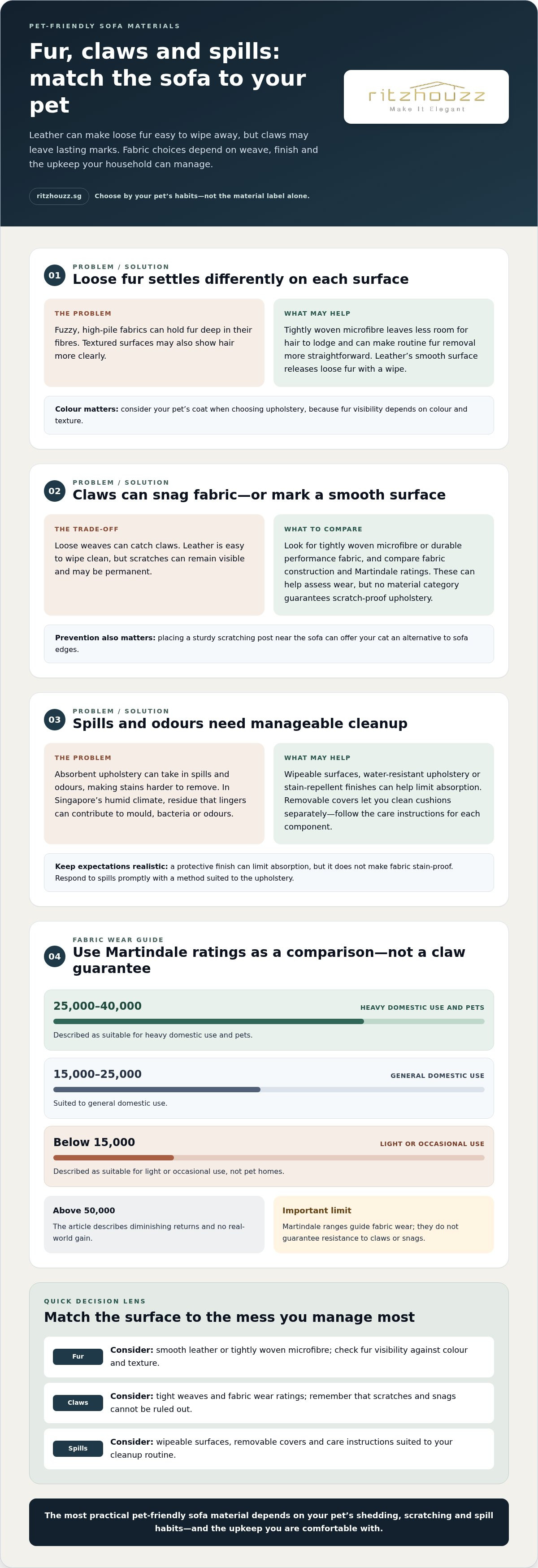
How pet claws, hair and spills affect sofa upholstery
Claws, loose hair and spills affect upholstery in different ways, so one fabric feature rarely solves every concern. A cat’s claws can catch raised threads, while a shedding dog can leave fur across the seat. Water and other spills may soak into absorbent fabric, leaving stains or lingering smells. For a sofa used daily, assess each risk separately.
Claw contact often occurs in specific places: sofa arms, cushion edges and the route pets take when jumping up. A loose weave gives claws more opportunity to snag threads. Examine these high-contact areas, not just the large seat panels. If your cat climbs onto one arm before settling, give that panel particular attention when comparing fabrics.
Hair behaves differently depending on texture and colour. Fuzzy, high-pile upholstery can hold fur deep in its fibres, making a quick vacuum less effective. Velvet can show tracks and visible fur, so it may need brushing. Fur also stands out against contrasting colours. A light-coated cat on dark upholstery, for instance, makes shed hair easier to spot.
Spills create another upkeep challenge. Standard sofa fabrics can absorb liquid and odours, making marks harder to remove. A water-resistant finish can help stop liquid from sinking in, while a wipeable surface gives you a practical way to address fresh messes. Clean spills promptly with a method suited to the upholstery, rather than rubbing liquid deeper into the fabric.
In Singapore’s humid climate, drying is part of sofa care. After cleaning a cushion or cover, let it dry fully before putting it back. Removable covers, wipeable surfaces and modular construction can make routine maintenance more manageable and help address mould, bacteria or odour buildup. This matters when children and pets share a living area, especially after muddy paws or everyday spills.
Match your maintenance routine to the material. Vacuum surface fur from a fabric seat, then check seams and cushion edges for trapped hair. Wipe a smooth surface after a fresh spill, and clean removable components according to their care instructions. Scratch-resistant fabric may help mask minor imperfections, but claws can still leave marks. Keep a scratching post near the sofa to give cats a suitable alternative.
When enquiring about a sofa, describe your pet’s habits, the areas they use and the cleanup you want to manage. These details help focus the upholstery discussion on everyday comfort, fur removal and spill care.
RitzHouzz: Aura 87211 Sofa
The Aura 87211 Sofa gives you a specific sofa to consider as you weigh upholstery, cleaning and daily use around pets. RitzHouzz also offers the Alladin 87186 Sofa, giving you another model to explore as you think about your living space and household needs.
When discussing sofa options, share practical details: whether your pet sheds heavily, scratches cushion edges or is prone to spills. These habits help clarify the material and maintenance priorities that matter most at home. Focus on trade-offs that suit your routine, rather than assuming any sofa is scratch-proof or maintenance-free.
For a closer look at the Aura 87211 Sofa and other sofa choices, contact RitzHouzz or visit ritzhouzz.sg.
Choose a Sofa That Suits Your Home
Consider how the sofa will work in your room, not just how it looks on its own. Think about the seating layout, available space and how your household shares the living area. These details can help narrow your choice of pet-friendly sofa materials while keeping the room comfortable and cohesive.
Before deciding, note your preferred sofa size, placement and the features that matter most to your household. Clear priorities make it easier to discuss suitable options and compare them in the context of your home.
For help exploring sofa choices, contact RitzHouzz about pet-friendly sofas. A considered choice can bring comfort and style together in a space made for everyday living.
Frequently Asked Questions
Which sofa materials cope with cats and dogs?
Tightly constructed upholstery and performance fabrics are options to compare in homes with cats and dogs. Note where each pet spends time: a cat may favour the backrest, while a dog may settle on a particular seat. Examine those contact areas, including seams and piping, and choose a fabric whose care routine suits your household. Both the sofa’s construction and your pet’s behaviour shape the decision.
Are Cat-Proof Couches an Essential Purchase for Pet Owners?
No, a couch marketed as cat-proof isn’t essential. A product label cannot account for every cat’s habits or prevent all marks from daily use. Consider how your cat behaves around furniture and how much visible wear you’re comfortable with. A cat that rarely climbs onto sofas, for example, creates different demands from one that regularly rests there.
Are removable covers worth it for pet owners?
Removable covers can be worthwhile if your household wants to clean individual sofa components instead of the whole piece at once. Consider the practical routine: where will cushions sit while covers are being cleaned, and can you identify each cover’s position afterward? Before choosing, inspect how the covers attach and whether their care instructions fit the time and space you have for cleaning.
Can pet-friendly furniture still look stylish?
Yes. A pet-conscious sofa can suit a carefully designed room through its silhouette, upholstery texture and relationship to nearby furniture. Coordinate its visual weight with a coffee table, for example, and choose cushions that complement the room’s palette. A washable throw can look intentional rather than temporary, helping the seating area feel composed while serving a practical purpose.
Do light-colored sofas work with pets?
Yes, a light-coloured sofa can work in a home with pets. Consider how it will be used and where it will sit, rather than assuming light upholstery is impractical. A removable throw on a frequently used seat can make that area easier to manage. Before settling on a shade, view an upholstery sample in the room’s lighting and alongside nearby furnishings.
Which sofa fabrics are easiest to clean pet hair from?
Choose upholstery that suits the cleaning tools and routine you already use. Before buying, inspect seams, piping and the gaps between cushions, where loose hair can collect. Ask how the fabric should be cleaned and follow its care instructions when removing hair. Accessible cushions can also make it easier to reach areas that a quick surface clean misses.
Are microfiber and performance fabrics good choices for homes with pets?
These can be suitable choices, but compare the specific upholstery rather than relying on a broad fabric label. Review the care instructions and consider how people and pets will use the sofa at home. If a fabric sample is available, view it alongside your existing furniture and assess its texture in your room’s lighting. This helps you judge its appearance and practical fit.
Is leather or faux leather suitable for sofas with cats and dogs?
Either may suit a home with pets, depending on your priorities and tolerance for visible wear. Consider the specific upholstery finish and how it fits your household’s cleaning routine. If the sofa will be a shared family seat, think about how often it will need attention and whether surface marks would concern you. Compare the materials in person when possible, rather than choosing by name alone.
Disclaimer
The information in this article is provided for general guidance only and is intended to help readers make informed decisions about mattresses, furniture, renovation, carpentry and related home solutions. Product specifications, prices, promotions, availability, warranties and services may change without notice. Actual colours, materials, dimensions and comfort may vary from images or descriptions. For renovation, carpentry or space-planning projects, final recommendations, measurements, scope of work and quotations should be confirmed directly with RitzHouzz before proceeding. Mattress comfort and suitability are subjective, and any health-related information is general in nature and should not be treated as medical advice. Please contact RitzHouzz or visit our showroom for the latest product and service information.