

How to Protect Wood Furniture From Humidity at Home
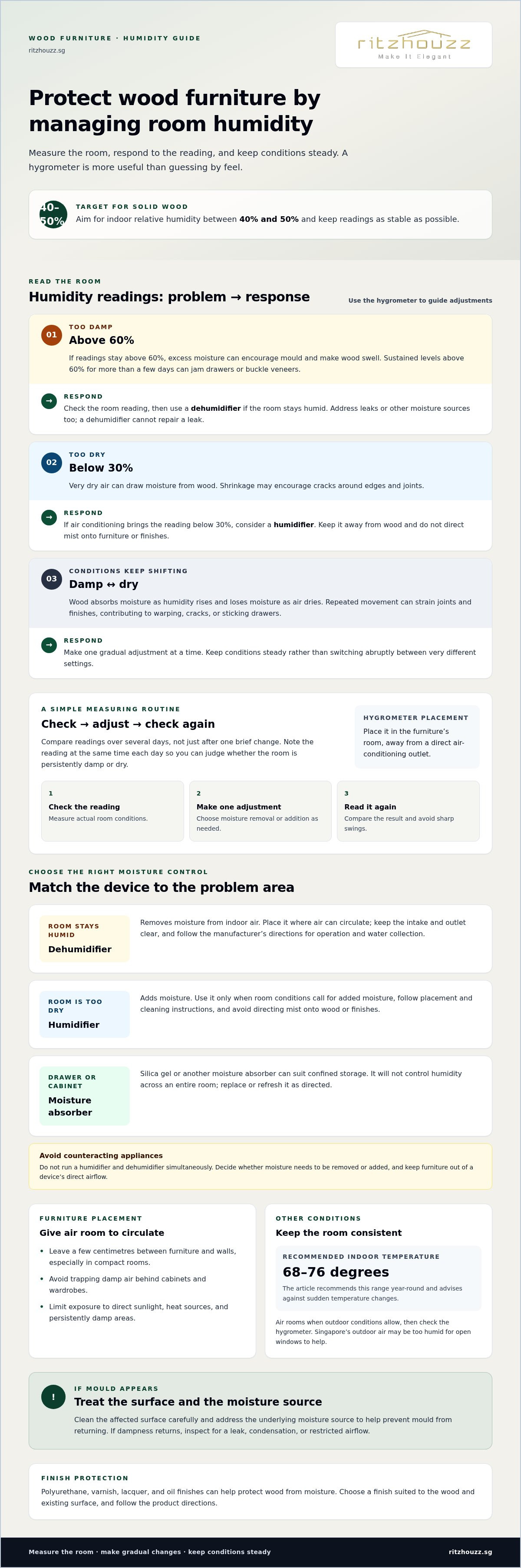
A hygrometer is more useful than guessing by feel: to learn how to protect wood furniture from humidity, measure indoor relative humidity and aim for 40% to 50% for solid wood. If the reading stays above 60%, excess moisture can encourage mould and cause wood to swell; keeping humidity steady helps reduce the risk of warping, cracking and sticking drawers.
Singapore’s humid climate makes moisture an obvious concern, but sharp shifts between damp and dry conditions can also stress wood. Use a hygrometer to assess the room before deciding whether to adjust it, rather than relying on how the air feels.
This guide explains how humidity affects wood, which readings need attention, and how to position furniture to improve airflow and limit exposure to damp areas, heat and direct sunlight. You’ll also learn how to respond to mould by addressing the source of moisture, protecting both the furniture and the room.
Key Takeaways
- Track indoor moisture with a hygrometer and use the readings to guide adjustments, rather than relying on how the room feels.
- Keep humidity as steady as possible; repeated shifts between damp and dry conditions can strain wood and its joints.
- Position furniture to allow airflow, and limit exposure to direct sunlight, heat sources and persistently damp areas.
- If mould appears, clean the affected surface carefully and address the underlying moisture source to help prevent its return.
- Choose furniture that suits your space and consider how its placement will support airflow and everyday care.
Does humidity make wood swell?
- Yes. Wood absorbs moisture from surrounding air, and its fibres swell as humidity rises. When the air dries, the wood loses moisture and shrinks. Repeated movement can strain joints and finishes, causing warping, cracks or drawers that stick. For solid wooden furniture, aim for indoor relative humidity between 40% and 50%. Keeping readings stable matters as much as reaching the target, since abrupt changes give wood less time to adjust.
A humid afternoon in Singapore doesn’t necessarily mean a room is persistently damp. Measure indoor conditions instead of judging by touch. To understand how to protect wood furniture from humidity, start with the room’s actual readings. Stable conditions help you make considered adjustments and protect the furniture’s structure and appearance.
- Place a hygrometer in the room where wooden furniture sits, then note its reading at the same time each day. Compare readings over several days rather than reacting to one brief change. If the level stays above 60%, take steps to reduce excess moisture. Sustained humidity above 60% for more than a few days can make wood swell enough to jam drawers or buckle veneers.
Readings below 30% also deserve attention. Very dry air can draw moisture from wood, encouraging shrinkage cracks around edges and joints. A target of 40% to 50% gives you a useful middle ground for solid wood. Keep the hygrometer away from a direct air-conditioning outlet, which could distort your sense of the room’s overall conditions.
- Use air conditioning with the hygrometer as your guide. Air conditioning can also reduce indoor humidity; if the reading falls below 30%, consider a humidifier to add moisture. Avoid making large, sudden adjustments. Wood responds to its surroundings, so steady changes are preferable to sharp swings between damp and dry air.
Keep the room temperature consistent as well. A recommended indoor range is 68-76 degrees year-round. Sudden temperature changes can make wood expand and contract, increasing the risk of warping, cracking or splitting. Set the air conditioner for comfortable, consistent operation rather than repeatedly switching between very different settings.
- Support humidity control with sensible ventilation. Air the room when outdoor conditions allow, and avoid trapping damp air around furniture in closed spaces. Ventilation helps circulate indoor air, but it can’t replace measuring humidity: Singapore’s outdoor air may be too humid for open windows to help. Check the hygrometer after airing the room and compare the reading with the previous one.
For how to protect wood furniture from humidity, use a measured sequence: check the room, make one gradual adjustment, then read the hygrometer again. If readings remain above 60%, focus on reducing excess moisture. If air conditioning brings the level below 30%, consider adding moisture instead. This approach helps maintain stable conditions and limits repeated expansion and shrinkage.
What humidity level is bad for wooden furniture?
Persistent excess moisture is the main concern because it can encourage mould and affect wooden furniture. Choose a moisture-control method based on where dampness occurs, and use equipment according to its instructions rather than running it without a clear purpose.
- Use a dehumidifier for damp rooms. It removes moisture from indoor air and can help in rooms that stay humid, such as a closed bedroom during a rainy spell. Place it where air can circulate around the unit, not behind furniture or inside a cabinet. Keep the intake and outlet clear, and follow the manufacturer’s directions for operation and water collection.
- Use a humidifier only when the air is dry. A humidifier adds moisture, so it works against a dehumidifier’s purpose. In Singapore, don’t run one simply because you have wooden furniture; use it only when room conditions call for added moisture. Keep it away from wood surfaces, follow its placement and cleaning instructions, and avoid directing mist onto furniture, finishes or stored items.
- Choose a device suited to the problem area. A dehumidifier addresses moisture in a room, while a small absorber is better suited to a confined space such as a drawer or cabinet. Silica gel and moisture absorbers can help in enclosed storage, but they won’t control the humidity of an entire room. Place them where air is still, and replace or refresh them as directed.
- Make one adjustment at a time. If you use air conditioning, don’t run a humidifier and dehumidifier simultaneously to counteract one another. Decide whether the room needs moisture removed or added, then use the corresponding appliance. Keep furniture out of the unit’s direct airflow. This makes it easier to tell which adjustment is affecting the room without exposing wood to a concentrated stream.
- Maintain the equipment and address the moisture source. Empty and clean a dehumidifier as directed, since collected water and neglected parts undermine routine upkeep. If dampness returns after the unit stops, inspect for a leak, condensation or restricted airflow. A dehumidifier can remove moisture from the air, but it cannot repair a leak. Resolve the source as well as managing the room’s conditions.
Furniture placement away from vents, sunlight and damp areas
Polyurethane, varnish, lacquer and oil finishes can help protect wood from moisture. Choose a finish suited to the furniture’s wood and existing surface, and follow the product directions.
- Leave space for air to circulate. Position furniture a few centimetres from walls, especially in a compact HDB bedroom or condominium study. Airflow helps prevent damp pockets behind cabinets and wardrobes. Avoid placing solid wood directly against a wall that feels cool or shows condensation. Check behind furniture during routine cleaning, as a hidden musty smell may point to trapped moisture.
- Keep furniture clear of heat sources and vents. Avoid placing wooden pieces beside air-conditioning outlets, heaters or radiators. Where space allows, maintain 12-18 inches from radiators, heaters, HVAC vents, poorly insulated exterior walls and condensation-prone windows. Direct heat can dry one side faster than another, encouraging warping or cracking. In a Singapore flat, check whether an air-conditioning vent blows directly across a cabinet or table.
- Reduce direct sunlight. Strong sunlight through a window can fade wood and varnish over time. UV rays can also weaken wood fibres, making surfaces more vulnerable to brittleness, cracking or warping. Move a dining table out of direct sun, or reposition a cabinet that receives bright afternoon light. Curtains, blinds or UV-protective window film can help limit prolonged exposure.
- Keep furniture away from damp areas. Don’t place wooden furniture where water regularly collects, such as beside a leak, a persistently damp wall or a window with recurring condensation. Check the floor and wall before positioning a cabinet. Where possible, keep solid wood furniture off tiled or damp floors to allow air to circulate underneath. If excess moisture appears, address its source before returning furniture to the area.
- Protect surfaces with care. Polyurethane, varnish, lacquer and oil finishes can help protect wood from moisture, but the right option depends on the wood and its existing finish. Follow the manufacturer’s directions and test a stain or finish on a small, hidden area first. Don’t mix petroleum-based finishes with vegetable-oil-based finishes. Finishing won’t replace sensible placement: sunlight, heat and damp conditions can still affect furniture.
- Review the room after rearranging. After moving a sofa-side table, wardrobe or dining set, check nearby windows, vents and walls. Look for direct sunlight at different times of day and signs of condensation after air conditioning runs. A small layout adjustment can move furniture away from heat or excess moisture while preserving comfortable walking space in a compact Singapore home.
How humidity affects wood furniture
Humidity changes make wood absorb or release moisture, causing it to expand or shrink. Dust wooden furniture weekly with a soft microfiber cloth; condition it every 3-6 months using a product suited to its wood and finish. Musty smells, sticky drawers, cracks or buckled veneers can signal moisture-related trouble.
- Watch for repeated movement, not just one damp day. Solid wood responds to its environment as moisture enters and leaves its fibres. A gradual relative-humidity shift from 40% to 65% over two weeks is less damaging than the same change overnight. Rapid movement can stress joints and finishes before the furniture has time to adjust. Use a hygrometer to compare readings over time, rather than treating one reading as the whole story.
- Consider the full humidity cycle in the room. Furniture exposed to alternating extremes can experience more strain than pieces kept in consistently humid conditions. A home cycling between 30% relative humidity in winter and 70% in summer can damage furniture through repeated expansion and shrinkage. In Singapore, focus on patterns in your own rooms, including changes after air conditioning runs. Keep notes alongside hygrometer readings to identify recurring shifts.
- Inspect joints, edges and drawers for early clues. Dry air can shrink wood and open cracks around edges or joints; excess moisture can make drawers stick or veneers buckle. Check the inside of cabinets too, since antique furniture interiors can be 5-10% RH drier than the surrounding room in winter. A musty smell may indicate mould, while small holes can signal insects. Note where damage appears and whether it follows a damp wall or other environmental condition.
- Clean gently and condition the finish with care. Wipe dust weekly with a soft microfiber cloth. For sticky or oily marks, use a damp cloth with mild soap, then dry the surface promptly. Avoid alcohol- or ammonia-based cleaners, which can strip protective finishes, and avoid silicone-based polish that may leave residue. Every 3-6 months, apply beeswax or wood conditioner if appropriate for the piece. Follow product directions, and don’t mix petroleum-based and vegetable-oil-based finishes.
- Respond to visible changes before they worsen. If a drawer becomes sticky, don’t force it; humidity-related swelling may ease as conditions change. For mould, clean gently without soaking the wood, then dry it completely and address the moisture source. Unfinished wood faces added risk when relative humidity exceeds 65%, which can contribute to warping, joint failure and mould. Persistent damage calls for careful assessment, especially on valuable solid wood furniture, such as the specialty game tables curated by The Family Game Room.
What dehumidifier settings help protect wood furniture?
- Choose a steady setpoint. If your dehumidifier allows you to set a humidity target, choose a setting and let the unit regulate around it. Avoid changing it repeatedly in response to brief weather shifts. Frequent adjustments can create unnecessary operating cycles and make conditions harder to keep consistent. Follow the manufacturer’s guidance when selecting a setting for your model.
- Use automatic operation when available. An auto or humidity-control mode can switch the unit on and off as room conditions change, reducing the need for constant manual adjustments. Check the control panel to understand the selected mode. If your model has no automatic setting, follow a consistent routine and avoid leaving it on the most intensive setting without a reason.
- Select a fan setting suited to the room. A higher fan setting moves air through the machine more quickly, while a quieter setting may suit a bedroom during rest hours. Follow the appliance instructions and keep furniture out of the direct path of discharged air. Don’t let a cabinet or table receive a concentrated stream throughout the day, even while dehumidifying the room.
- Use the timer to establish a repeatable routine. If your appliance has a timer, schedule it for periods when the room is typically closed and damp, rather than changing settings throughout the day. For example, you might run it after returning from a rainy outing, then let the selected control mode manage the cycle. Use only functions described in the manual.
- Keep doors and windows consistent during a cycle. Opening a window while the machine runs can continually introduce outdoor air and make operation less effective. Decide whether to keep the room closed during the cycle, then maintain those conditions until it finishes. This can help in an enclosed study or bedroom where furniture shares the same indoor environment.
- Review changes in the furniture itself. Notice whether drawers continue to move smoothly and whether cabinet interiors feel damp. If a setting leaves the room overly dry, reduce the intensity or shorten the operating period, following the appliance instructions. Don’t try to correct each piece with direct airflow. Aim for consistent room conditions, not rapid surface drying.
- Keep a simple operating routine. Use one setting for a reasonable period, then assess whether it suits the room. Note the selected mode and any changes in drawer movement or musty odours. This helps you make deliberate adjustments, understand how the appliance behaves at home and avoid needless changes that undermine consistent care for wooden furniture.
RitzHouzz: Aura 87211 Sofa
The Aura 87211 Sofa from RitzHouzz offers a considered option when furnishing a living room in Singapore. The humidity guidance in this article applies to wooden furniture, but thoughtful room planning also helps you position larger pieces with airflow and daily use in mind. Keep the sofa clear of persistently damp areas and direct sunlight, and leave space around nearby wooden furniture to support circulation.
If you’re comparing living-room options, explore the sofas available at RitzHouzz, including the Alladin 87186 Sofa. Visit ritzhouzz.sg to view the range or contact RitzHouzz with your furniture enquiry.
Make furniture care part of your room plan
When arranging a home, consider furniture placement alongside how each room is used. A cabinet in a rarely opened corner may need different attention from a dining table near a frequently used window. For handcrafted solid wood pieces, such as dining tables from The Mensa Table Company, stable conditions and proper airflow protect both the tabletop and structural joints over the long term. Note where you see condensation or sunlight, and whether drawers move differently. These observations can help you refine your care routine and make practical choices when rearranging or furnishing a room.
Knowing how to protect wood furniture from humidity is ultimately about responding to the conditions around each piece, rather than relying on a single treatment. If you’re planning a living-room update or comparing furniture for your home, RitzHouzz can help with furniture advice. Contact RitzHouzz for furniture advice, and take the next step toward a thoughtfully arranged home.
Frequently Asked Questions
Do You Really Need a Hygrometer in Summer?
Yes. A hygrometer can reveal indoor conditions that warm, humid outdoor weather can’t reliably predict. It’s useful for comparing rooms with different air-conditioning use, such as a cooled bedroom and a naturally ventilated living area. Use readings as context for furniture care rather than assuming every room has the same conditions. A hygrometer distinguishes indoor moisture from how the weather feels outside.
What Humidity Levels Actually Do Damage - and Which Woods Are Most Vulnerable?
Persistent dampness is more concerning than a brief fluctuation, particularly for unfinished or lightly finished surfaces. Use the relative-humidity thresholds stated earlier in this guide, keeping in mind the difference between sustained exposure and a short-lived change. No single ranking establishes which wood species is most vulnerable. Teak, Hinoki, rubberwood and oak are identified as choices for humid climates, but finish and construction also affect how a piece responds.
What humidity level is ideal for wood furniture in Singapore?
Use the solid-wood target range stated earlier in this guide as your reference. In a Singapore home, consider the furniture’s immediate setting as well as the room: a cabinet interior may have different conditions from the open living area. Keep records of recurring dampness or changes in furniture movement, then adjust the room routine accordingly. A consistent environment is a more useful aim than frequent, drastic corrections.
How does high humidity damage wood furniture?
High moisture can make wood fibres absorb water and change dimensions, placing stress on joints and surface layers. Oak can change dimension by roughly 1% for every 4% shift in moisture content. That movement may appear as misaligned doors or veneers lifting at an edge. Repeated damp and dry cycles can compound the stress, so note whether a change affects one area or several pieces in the same room.
How to improve ventilation around wooden furniture?
Look for obstacles that block airflow, such as storage boxes packed behind a cabinet or items covering its lower openings. Clear them and inspect the back and underside during routine cleaning. In a bedroom, check whether bedding or stored belongings press against nearby furniture. These small adjustments support circulation without requiring a major change to the layout.
How to prevent mold and mildew on wood furniture?
Keep enclosed storage from becoming a place where dampness goes unnoticed. Charcoal bags or moisture absorbers inside drawers and cabinets can help manage local moisture. Don’t store items while they’re still damp, and inspect the contents if a cabinet develops a musty odour. If the smell returns after you remove the contents, look for an ongoing source of moisture nearby rather than relying only on an absorber.
How far should wood furniture be kept from walls and air conditioners?
There’s no single layout measurement that suits every room. Keep furniture out of an air conditioner’s direct stream, and leave enough space behind it for circulation and inspection. In a compact bedroom, check whether a vent blows across the same surface for long periods and whether the wall shows condensation. Adjust the furniture’s position to avoid these conditions while preserving clear access around it.
Disclaimer
The information in this article is provided for general guidance only and is intended to help readers make informed decisions about mattresses, furniture, renovation, carpentry and related home solutions. Product specifications, prices, promotions, availability, warranties and services may change without notice. Actual colours, materials, dimensions and comfort may vary from images or descriptions. For renovation, carpentry or space-planning projects, final recommendations, measurements, scope of work and quotations should be confirmed directly with RitzHouzz before proceeding. Mattress comfort and suitability are subjective, and any health-related information is general in nature and should not be treated as medical advice. Please contact RitzHouzz or visit our showroom for the latest product and service information.