

How Often Should You Replace Your Mattress? Signs to Check
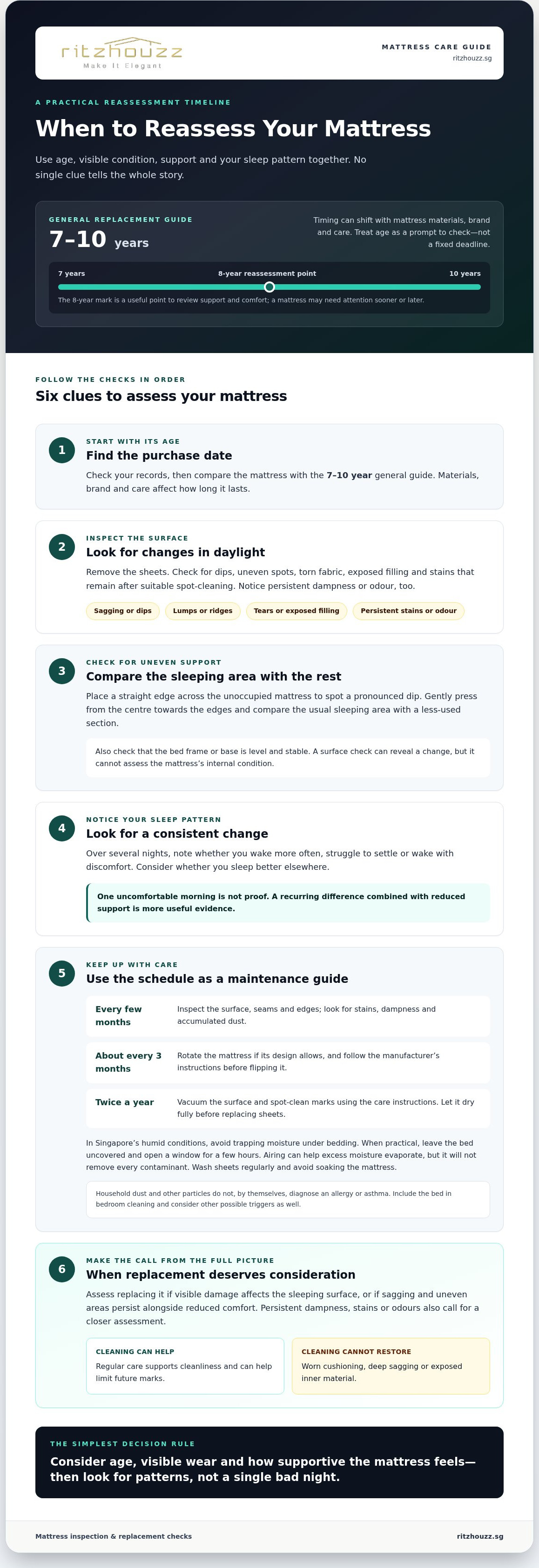
A mattress can feel familiar long after it’s time to reassess it. In Singapore, a useful general guide for how often you should replace your mattress is every 7 to 10 years, depending on its materials, brand and care. Visible sagging, persistent discomfort or changes in how well you sleep can mean it’s worth replacing sooner.
Age alone doesn’t tell the whole story when deciding how often should you replace your mattress. Its condition, signs of wear, allergy concerns and how supportive it feels all matter. This guide covers practical clues to check, how lifespan varies by mattress type, and when discomfort may suggest the mattress no longer suits you. Use these checks to assess your mattress and compare replacements that fit your sleeping position, comfort preferences and bedroom.
Key Takeaways
- A mattress often lasts 7 to 10 years, but its materials, care and condition can shift the timing.
- Check for sagging, uneven spots, holes or stains; visible changes can signal that comfort and support have declined.
- Allergy symptoms and trapped moisture are reasons to review mattress cleanliness and bedroom care habits.
- Notice whether you wake with discomfort or sleep better elsewhere, as these patterns may point to inadequate mattress support.
1. Allergies, asthma, and mattress contaminants
Over time, a mattress can collect household dust, skin flakes and other particles. Their presence alone doesn’t diagnose an allergy or asthma, but it makes the bed worth including in your bedroom cleaning routine. Notice whether symptoms seem worse in the bedroom, while considering other possible triggers too. A mattress that looks clean may still need regular care.
Start with simple maintenance. Vacuum the mattress surface and spot-clean marks twice a year, following its care instructions. Let the surface dry fully before replacing the sheets. In Singapore’s humid conditions, avoid trapping moisture under bedding. When practical, leave the bed uncovered and open a window for a few hours. Airing can help excess moisture evaporate, but it won’t remove every contaminant.
Rotate the mattress about every three months, if its design allows. This helps distribute wear instead of repeatedly loading the same area. Check the manufacturer’s instructions before flipping it, as some mattresses are designed for rotation only. Wash sheets regularly and leave enough space to vacuum around the bed. These steps support cleanliness, but they can’t restore worn-out cushioning.
Do children, adults or people with allergies need to replace their mattress on a different schedule? These guidelines don’t set a separate replacement interval for each group. Assess the mattress’s age, visible condition and ease of keeping it clean. For allergy concerns, consider bedroom dust and bedding care as well, rather than relying on replacement alone.
How much does a new mattress cost in Singapore? The price depends on its size, materials, construction and brand, so compare options with similar specifications. Exploring dedicated bedding retailers such as themattressboutique.com can help you review available styles and pricing. Comfort preferences, including firmness and cooling features, can also affect which mattresses suit your household. Choose for fit and support, not price alone.
Use a brief inspection routine every few months. Remove the sheets and check the surface, seams and edges for stains, dampness or accumulated dust. After airing the mattress, check for persistent odours or moisture. Vacuum the top and sides slowly, then spot-clean promptly using the care method recommended for the material. Avoid soaking the mattress, as trapped moisture can be difficult to dry completely.
Cleaning has its limits. If a mattress stays damp, has persistent stains or odours, or remains a concern despite careful maintenance, assess its overall condition as well as its age. A fresh cover may help keep it clean, but it won’t fix deep sagging or lost support. Keep a simple record of the purchase date and cleaning, so you can judge whether maintenance is still enough.
2. Sagging, lumps, holes and stains
A mattress can show wear in several ways, and each sign offers a different clue. Remove the sheets and inspect the sleeping surface in daylight. Look for a dip where you usually lie, raised or uneven areas, torn fabric, exposed filling and stains that remain after suitable spot-cleaning. Note where each mark appears, then compare both sides if the mattress is designed to be turned.
To check for a dip, place a straight edge across the unoccupied mattress. See whether the surface falls away beneath it, especially where your hips or shoulders rest. This visual check can’t assess the mattress’s internal condition, but it may reveal a pronounced change. Repeat it on the other side to see whether wear is localised or widespread.
Lumps and ridges can make your body settle unevenly. Gently press the surface with your hand, moving from the centre towards the edges. Compare the usual sleeping area with a less-used section. A noticeable difference, such as compressed padding on one side and a firmer feel near the edge, warrants attention alongside how comfortable the mattress feels when you lie down.
Holes and torn seams are easy to spot, but their significance depends on their location and size. A small surface snag is different from a tear that exposes inner material. For stains, check whether the mark is damp or dry, clean it according to the mattress’s care instructions, and let the area dry fully. Persistent moisture or odour calls for a closer assessment, not just a fresh sheet.
Does a mattress warranty cover sagging or wear, and for how long? Coverage periods and definitions vary, so there’s no single duration that applies to every mattress. Read the written terms to understand how sagging is assessed, which types of wear are covered, and what exclusions or care requirements apply.
Make a dated note or take a photo when you first notice a dip, stain or tear. This helps distinguish a recent change from an older mark and gives you a reference for future inspections. Check that the bed frame or base is level and stable, too. A poor foundation can affect how the mattress sits and make surface changes harder to interpret.
Consider replacing the mattress if visible damage affects the sleeping surface, or if sagging and uneven areas persist alongside reduced comfort. A removable protector can help limit future stains, but it won’t restore compressed padding or repair exposed inner material. Assess the mattress as a whole: its surface, the support beneath it and how it feels after a full night’s rest.
3. Signs a mattress needs replacing
Age is only one clue. The 8-year mark is a point when a mattress may no longer provide proper support and comfort. Consider what has changed since you bought it: do you wake more often, struggle to settle, or feel better after sleeping elsewhere? A consistent difference between your own bed and another sleeping surface can help identify whether your mattress deserves closer attention.
Pay attention to how you feel on waking, but don’t treat one uncomfortable morning as proof. Track the pattern over several nights. Note whether stiffness or discomfort follows sleeping in the same position, then compare with nights away from home. A recurring difference, combined with a mattress that feels less supportive, is more useful evidence than age alone.
Listen to the mattress, too. A spring mattress that starts creaking or clicking when you turn may have changed internally. Noise doesn’t automatically mean replacement is necessary, but it can accompany a change in feel or support. Check that the bed frame is stable and isn’t rubbing against a wall. If the noise continues when the frame is still, inspect the mattress and foundation separately.
Consider whether the mattress still suits your needs. A change in sleeping position, preferred firmness or bed-sharing arrangements can make a once-comfortable surface feel wrong. For example, someone who now sleeps mainly on their side may notice pressure more readily on a mattress that feels too firm. A mattress that no longer matches your comfort preferences may warrant replacement even without obvious surface damage.
Use a simple review before deciding. Check the purchase date, lie in your usual sleeping position and notice whether support feels consistent across the bed. If you share the mattress, compare each person’s experience, as one side may feel different. If the care instructions permit rotation, reassess after rotating it. This can help distinguish a temporary impression from a persistent change.
Several signs together make a stronger case than one clue alone. For instance, a mattress around the 8-year mark that feels less supportive and disrupts your rest warrants serious consideration. A newer mattress with no visible changes and consistent comfort may not need replacing just because a date has passed. Base the decision on the mattress’s age, condition and how it feels in everyday use.
4. Typical mattress lifespan
A practical general guide is to assess a mattress after 7 to 10 years. Actual lifespan depends on its materials, brand, construction and care, so the calendar alone shouldn’t decide replacement. A mattress approaching this range may still feel comfortable, while visible wear or reduced support can matter sooner. Use its age as a prompt for closer assessment, not as an automatic expiry date.
Material affects the estimate. Foam mattresses typically last 7 to 10 years, while innerspring mattresses typically last 7 to 8 years. Hybrid mattresses typically last 7 to 10 years. For a closer look at how various spring, foam, and hybrid models are built, bedding resources such as mattressworld.ae offer useful overviews of different mattress constructions. These ranges help frame expectations, but they don’t describe the condition of an individual mattress. Check how yours feels and looks alongside its material type.
Other constructions have different expected spans. Memory foam and gel memory foam mattresses should be replaced after 5 to 10 years, depending on brand and quality. Latex mattresses can last up to 15 years, while adjustable mattresses typically last 6 to 8 years. These figures aren’t a promise that each mattress will remain comfortable for that entire period.
Several factors shape a mattress’s lifespan. Material quality, construction and ongoing care all affect how it performs over time. A mattress used nightly may feel different from one in a rarely used guest room. In Singapore, bedroom humidity can also make moisture management important. Air the bed after dampness and follow its care instructions.
How can you extend a mattress’s lifespan? Use a stable, level base, follow the manufacturer’s care instructions and protect the surface from spills. Address dampness promptly and avoid putting repeated pressure on one area, such as by sitting on the same edge each time.
For a useful review, record the purchase date and material, then note changes in comfort during regular use. Compare the sleeping surface with an area that receives less pressure, and inspect the base for uneven support. If the mattress feels consistent and shows no concerning wear, age alone doesn’t mean replacement is necessary.
By contrast, a 6-year-old innerspring mattress with declining support deserves attention despite being within its typical range. A latex mattress near 15 years old also calls for a condition check, even though latex can last up to that age. Material estimates and actual wear must be considered together.
Use lifespan ranges for planning, then let comfort and condition guide your decision. For example, a mattress near the end of its expected lifespan that also feels uneven gives you stronger reasons to compare replacements. A mattress that remains comfortable and in good condition may not need replacing just because it has reached a particular age.
5. Back pain and inadequate mattress support
The 8-year mark is a point when a mattress may no longer provide proper support and comfort. Age alone can’t show whether it contributes to discomfort. Assess its condition alongside how it feels during sleep. A mattress with a changed surface, uneven support or persistent sagging gives you more to consider than its purchase date alone.
Notice how the mattress feels during a typical night. Do you repeatedly shift because one area is uncomfortable? Does it feel different beneath your hips, shoulders or lower back? These observations don’t identify a medical cause, but they can help you judge whether the mattress still suits your body and preferred sleeping position.
Try a practical comparison over several nights. Note how you feel after sleeping on your usual mattress, then compare it with a different surface, such as a guest bed. Record whether you settled comfortably, changed positions often or noticed a difference on waking. One night’s experience isn’t enough to establish a pattern.
How does mattress age affect sleep quality and back pain? As a mattress ages, its materials can change, and its support or comfort may decline. At the 8-year mark, it may no longer provide proper support, but age alone doesn’t prove that it causes back pain or poor sleep.
Firmness is personal and doesn’t directly measure support. A very firm mattress may feel uncomfortable if you prefer a softer surface, while another sleeper may find a plush mattress supportive. Consider your sleeping position, where your body makes contact and whether the mattress feels even. Don’t choose a replacement solely because a particular firmness is often recommended.
Check the foundation before blaming the mattress. A loose frame, unstable base or uneven slats can affect how the sleeping surface feels. Look beneath the mattress for visible damage, then check that it sits evenly. If the base is stable but the mattress feels noticeably different across its surface, assess the mattress more closely.
Use these observations together: the 8-year mark, surface condition, sleeping comfort and support from the base. If discomfort persists away from bed or changes with activity, the mattress may not explain it. Avoid treating a new mattress as a guaranteed remedy. Instead, compare firmness and support by lying in your usual position, and note how each surface feels beneath your body.
RitzHouzz: Aura 87211 Sofa
RitzHouzz offers the Aura 87211 Sofa, while mattress replacement decisions call for a different kind of comparison. If your current mattress feels uneven or less supportive, try comparing mattress comfort and firmness in person before choosing a replacement. Testing different firmness levels and materials are options to consider as you assess what feels comfortable for your sleeping position.
During a showroom visit, lie in your usual sleeping position and take time to notice how the mattress feels beneath your shoulders, hips and back. Compare the available options instead of relying on labels alone. Your comfort and preferred support are central to choosing a suitable replacement.
Contact RitzHouzz or visit ritzhouzz.sg to explore your next step.
Make Your Next Mattress Choice With Confidence
A considered comparison is more useful than deciding based on age alone. Before choosing, note what feels comfortable in your usual sleeping position and which qualities matter most to you, such as firmness, support or a cooler-feeling surface. This gives you a practical starting point for comparing mattresses.
Thinking about how often you should replace your mattress is also a chance to consider whether your current one still suits your routine. If you’re ready to explore a replacement, speak with RitzHouzz about mattress options and the details that matter to you.
Contact RitzHouzz for mattress advice, and take the next step toward a mattress that feels right for your home.
Frequently Asked Questions
How Do You Know When Your Mattress Needs Replacing?
Compare how the mattress performs now with how it felt before. Write down when you notice a change, whether you share the bed and whether the sensation occurs on both sides. This can help distinguish a mattress concern from a room or bed-base issue. When comparing replacements, test each mattress in your usual sleeping position rather than judging by touch alone.
How often should you change your mattress?
Use the material-specific lifespan guidance above as a planning reference, then review your mattress as it approaches that point. The right timing depends on how it performs in your home, not just on a calendar reminder. Keep the purchase details and care instructions together so you can make a reasoned comparison when deciding whether to keep or replace it.
Is a Mattress Still Good After 20 Years?
A mattress that has been used for 20 years is far beyond the lifespan ranges discussed above, so plan to replace it rather than assume it remains suitable. Before choosing a new one, check that its dimensions fit your existing bed frame and consider whether your preferred sleeping position or firmness has changed. A replacement should suit both your current needs and bedroom setup.
What Is the Average Lifespan of a Mattress?
No single lifespan applies equally to every mattress. The construction-specific guidance in the lifespan section is more useful for planning than one overall average. For a practical estimate, identify the mattress type and purchase date, then compare its current performance with expectations for that construction. This helps you plan ahead without treating an average as a guaranteed service life.
How often should you replace a mattress?
Use the relevant lifespan range above to decide when to start assessing replacement, not as an automatic deadline. Consider how the mattress feels in your usual sleeping position and whether it still suits your household. If you’re choosing between two options, compare their firmness and support in person before deciding.
What is the average lifespan of different mattress types?
Lifespan varies by construction, so use the type-by-type ranges in the lifespan section rather than applying one average to every mattress. Identify whether yours is foam, innerspring, hybrid, memory foam, latex or adjustable before using those estimates. If you don’t know its construction, check the product paperwork or label. Knowing the type makes lifespan guidance more relevant.
What are the signs that a mattress needs replacing?
Look for a change that persists over ordinary nights rather than reacting to one restless evening. A short sleep diary can help: note your sleep position, whether you woke during the night and how the mattress felt. If you share the bed, record each sleeper’s experience separately. These observations give you a clearer basis for comparing your mattress with a replacement.
Disclaimer
The information in this article is provided for general guidance only and is intended to help readers make informed decisions about mattresses, furniture, renovation, carpentry and related home solutions. Product specifications, prices, promotions, availability, warranties and services may change without notice. Actual colours, materials, dimensions and comfort may vary from images or descriptions. For renovation, carpentry or space-planning projects, final recommendations, measurements, scope of work and quotations should be confirmed directly with RitzHouzz before proceeding. Mattress comfort and suitability are subjective, and any health-related information is general in nature and should not be treated as medical advice. Please contact RitzHouzz or visit our showroom for the latest product and service information.