

Minimalist Furniture in Singapore: A Practical Guide
What if a pared-back home felt more useful, not less lived-in? For many Singapore homeowners, minimalist furniture design Singapore is not a choice between a calm neutral palette and the comfort, storage, or personality everyday life demands. Minimalism is not simply beige furniture or empty rooms. A considered space feels composed because each piece suits its proportions and has a clear purpose.
That balance matters in HDB and BTO flats, resale flats, and condominiums, where furniture needs to support daily routines without crowding walkways or leaving rooms bare. A sofa should suit the living area and how your household uses it. A dining set or storage piece should meet a real need while preserving space to move. Texture, shape, and carefully chosen details can add warmth without creating clutter.
This guide explains how to combine proportion, practical function, and visual simplicity. You’ll learn how to choose furniture around your layout, storage needs, and routines, and how custom furniture, multifunctional pieces, and space planning can bring warmth and character to a minimalist home without adding more than you need.
Key Takeaways
- Minimalist furniture is about intentional choices, useful function, and considered proportions, not simply owning fewer things.
- Use a clear selection sequence: measure the room, define how it’s used, shortlist essential pieces, then check their visual balance.
- For minimalist furniture design Singapore, match living, dining, and bedroom pieces to your routines and available space rather than following a fixed layout.
- Balance storage and furniture with clear movement paths to keep HDB, BTO, resale-flat, and condo interiors practical and visually calm.
- Plan your needs and measurements before choosing pieces. Furniture customisation and space planning can help tailor decisions to your home.
What Minimalist Furniture Design in Singapore Really Means
Minimalist design is intentional editing, not simply owning fewer things. A room can contain the furniture and storage a household needs while still feeling composed, provided each piece serves a purpose, suits the room’s proportions, and avoids unnecessary visual noise. The concept of minimalism extends beyond interiors, but its practical value in furniture selection is clear: keep what supports daily life and be deliberate about how it looks and fits.
A minimalist room is a complete, comfortable space where every piece earns its place, rather than an empty room waiting to be furnished.
For minimalist furniture design Singapore, that distinction matters in homes where a room may support several routines. The right choices depend less on a strict style formula than on how the space is used, what needs to be stored, and how people move through it.
Minimalist furniture versus an empty-looking room
A finished room doesn’t need layers of decoration, but it does need a sense of purpose. A comfortable sofa can anchor a living area, while a dining table can define a place to gather. Choose a few focal pieces, then let their shape, finish, or texture provide interest instead of filling every surface with accessories. Minimalism doesn’t require one palette or material. The aim is considered restraint, not uniformity.
Comfort remains essential. Consider how many people regularly use the seating and whether the room needs flexible space for hosting. A pared-back arrangement should make ordinary routines easier, not leave household members without somewhere to sit or put things.
Why proportion and purpose matter in Singapore homes
HDB, BTO, resale-flat, and condominium layouts differ, so a piece that suits one home may overwhelm another. Assess the actual room, including door swings, routes between furniture, and connections to adjoining areas. A dining set needs to work not only at mealtimes but also with the surrounding circulation. A sofa should fit the living area without obstructing everyday movement.
Minimalist choices can still support storage, hosting, and personal belongings. A storage bed, built-in wardrobe, or multifunctional piece may help organise frequently used items, while custom furniture and space planning can respond to a particular layout. The aim isn’t to hide every sign of life. It’s to make room for what matters without allowing furniture to compete for attention.
How to Choose Minimalist Furniture Without Sacrificing Comfort
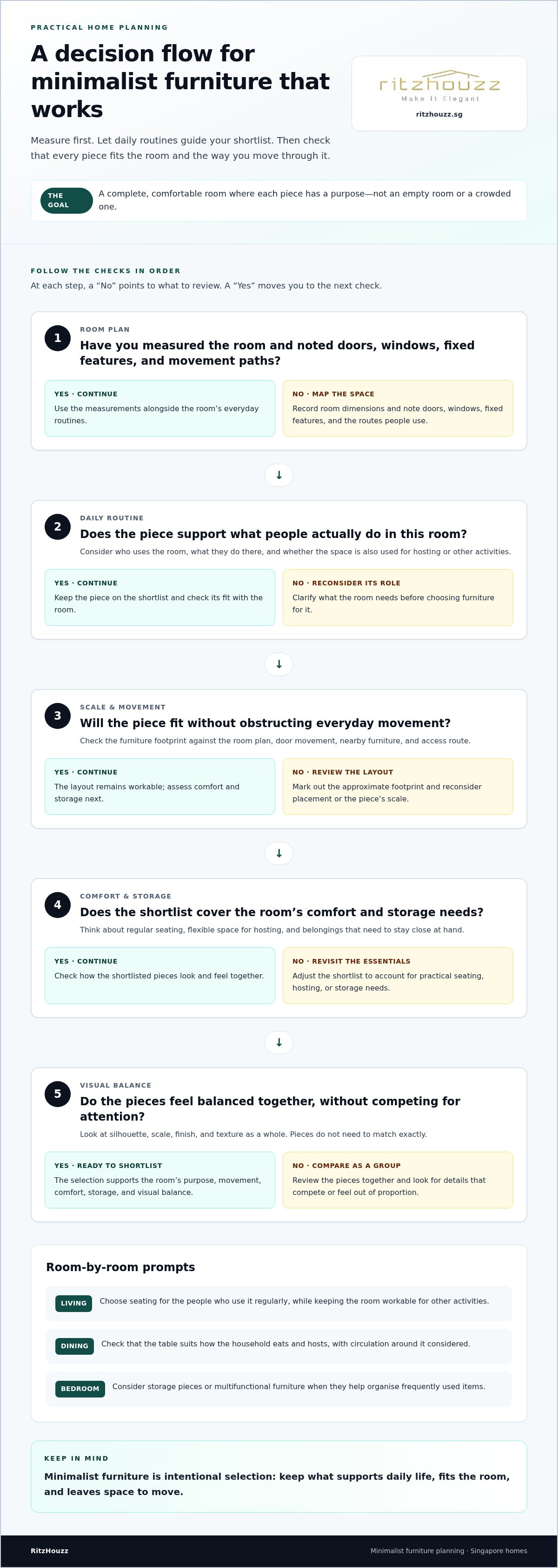
Choose in a practical order: measure the room, define how it will be used, shortlist essential pieces, then assess how they look together. This helps prevent a clean-looking design from becoming awkward to live with. In minimalist furniture selection, let function lead and decoration follow.
For minimalist furniture design Singapore, the best choices respond to your household rather than a fixed formula. A sofa should offer comfortable seating for the people who use it regularly while leaving the room workable for other activities. Storage matters too. Plan for items that need to stay close at hand so everyday life doesn’t crowd tabletops and shelves.
Start with room measurements and daily routines
Record the room’s dimensions, then note doors, windows, fixed features, and the paths people use to move through the space. Measurements are more useful when paired with a routine: who uses the room, what they do there, and what furniture those activities require. A living area used for relaxing and hosting, for example, may need a different seating arrangement from one used mainly for quiet evenings.
Before settling on a layout, consider how furniture will reach its intended position and whether it will fit through the access route. You can mark out the approximate footprint on the floor to judge how a piece relates to nearby furniture and circulation. Check the placement against the room plan, including door movement, rather than judging a piece by itself.
Choose comfort, storage, and visual simplicity together
Compare each shortlisted piece with the room and the other furniture. A sofa can provide practical seating without dominating a compact living area if its scale and silhouette feel proportionate. A dining table should suit how the household eats and hosts, while storage should accommodate belongings without turning every surface into a display area.
Pieces don’t need to match exactly. Look for a shared sense of balance: silhouettes that sit comfortably together, details that don’t compete, and enough contrast to keep the room from feeling flat. Assessing a sofa alongside other furniture can reveal whether its scale and appearance work as part of the whole. Where possible, see furniture in person and consider its comfort and presence, not appearance alone.
If the layout is difficult to resolve, RitzHouzz offers furniture customisation and interior design consultancy. Share your room measurements and requirements through a furniture and space-planning enquiry to discuss options suited to your home.
Minimalist Furniture Ideas for Living, Dining, and Bedroom Spaces
Furniture choices work best when they respond to what each room needs to do. In minimalist furniture design Singapore, a compact living area, a dining space used for hosting, and a bedroom that doubles as a study may each call for a different balance of furniture and open floor area. Use the comparison below as a starting point, then adapt it to your home’s layout and routines.
| Room purpose | Essential furniture | Space considerations | Minimalist design cues |
|---|---|---|---|
| Living: relaxing, conversation, or hosting | Sofa, with occasional additional seating if needed | Consider sofa scale, circulation, and access to storage | Let seating anchor the room; keep surfaces purposeful |
| Dining: everyday meals or gatherings | Dining table and chairs suited to household use | Allow people to sit, stand, and move around the table comfortably | Choose a considered shape and avoid excess furniture nearby |
| Bedroom: rest, dressing, or other regular activities | Bed and storage for frequently used belongings | Preserve usable floor area and access around key furniture | Keep essential items close and reduce visual competition |
Living rooms: make seating the considered focal point
Start with how many people use the living room and how they spend time there. A sofa should provide suitable seating without making the route through the space feel obstructed. If the room also needs storage, decide where everyday items will go so tables and shelves remain useful rather than crowded. Personal touches can come through in a few meaningful objects or distinctive furniture details. Explore the sofa collection to compare available sofa categories.
Dining and bedrooms: prioritise useful forms
For dining, choose a table shape and size that suit household routines and the room’s proportions. If hosting is occasional, an extendable table may be worth considering. In a bedroom, balance the bed with essential storage while keeping floor space practical for dressing and movement. Where a room has several uses or limited space, a Murphy bed or other multifunctional furniture may offer flexibility if its form and operation suit the layout.
Before deciding, picture the pieces in place together rather than selecting each in isolation. Check how people will move between them and whether the room still supports its intended activities. For broader planning, connect furniture choices to the home’s overall layout, storage needs, and daily patterns instead of treating each room as a separate styling exercise.
How to Keep Minimalist Furniture Practical in HDB, BTO, and Condo Homes
A minimalist furniture plan should make everyday movement and storage easier, not just leave a room looking uncluttered. HDB, BTO, resale-flat, and condominium homes have different layouts, so assess your own floor plan rather than relying on a standard arrangement. Use this checklist to balance furniture, storage, and visual calm:
- Trace daily routes. Map how people move between the entrance, seating, dining areas, bedrooms, and storage. Check that furniture won’t obstruct doors or make regular paths awkward.
- Plan storage around real belongings. Decide which items need to be stored out of sight and which should stay easy to reach. Choose storage that serves those needs instead of adding cabinets by default.
- Give each piece a purpose. Before adding furniture, identify the activity it supports. If a room needs to serve more than one purpose, consider multifunctional furniture that suits the layout.
- Check access as well as placement. Consider the route furniture must take into the home and through the rooms. A piece needs to fit its intended position and be practical to bring there.
- Review the whole composition. Look at how each item relates to the room and the other pieces. Keep useful open space and avoid filling a gap simply because it is empty.
Plan circulation and storage before adding furniture
Start with the route, not the shopping list. In a living area, consider how people pass between the entrance, sofa, and dining space. In a bedroom, make sure storage remains accessible without disrupting the room’s main use. Closed storage can contain belongings that would otherwise crowd surfaces, while frequently used items should remain convenient. For flexible rooms, a Murphy bed or another multifunctional piece may preserve usable space when its form and operation suit the household’s routine.
Access deserves attention before you decide on a layout. Consider entrances, turns, and the route to the furniture’s final position, then compare those constraints with your room plan. This is especially useful when planning larger pieces or built-in storage.
Keep the look cohesive without making it impersonal
Visual calm doesn’t require identical furniture. Repeat a considered element, such as a shape or tone, to connect different pieces while allowing each to have its own character. A few personal objects can make the room feel lived in. Choose them deliberately and leave surfaces functional. Before adding another item, ask whether it supports the room’s use, improves storage, or contributes something meaningful to the overall composition.
For ideas on making a home work harder without crowding it, explore RitzHouzz furniture and space-saving options. Share your room dimensions and requirements when enquiring about a layout or suitable furniture.
Create a Minimalist Furniture Plan with RitzHouzz
Begin with what each room needs to support, then measure the available space, prioritise essential pieces, and refine the layout. Include the mattress and bed frame in a bedroom plan from the start: their combined footprint affects movement, storage, and how the room functions. Consider sleeping preferences alongside the room’s layout so a calm design remains comfortable and practical.
RitzHouzz offers furniture customisation and interior design consultancy, along with sofas, dining furniture, bedroom furniture, and space-saving furniture. Quality mattress options are also part of bedroom planning. The right combination depends on your household’s needs and the space available, not on following a fixed formula for minimalist furniture design Singapore.
When custom furniture or space planning may help
Custom furniture can be useful when a standard piece doesn’t suit a particular room layout or household requirement. A custom sofa may address specific seating needs, while tailored storage can make belongings easier to organise. For a bedroom, consider the bed frame, mattress, and storage together so each choice supports the room’s use. Multifunctional furniture may also suit a room that needs to serve more than one purpose.
Space planning brings these decisions together by considering how furnishings relate to circulation, storage, and daily routines, without adding features for their own sake.
Turn the furniture plan into a clear enquiry
Prepare a few details before making an enquiry:
- Measurements: Note room dimensions and fixed features that affect furniture placement.
- Room use: Describe who uses the space and what it needs to support, including sleeping and storage needs in bedrooms.
- Priorities: List essential furniture and any preferences for seating, mattress, or flexible use.
- Home context: Mention whether the layout is an HDB, BTO, resale flat, or condominium, and note relevant access or planning considerations.
These details create a useful starting point for discussing suitable furniture and space planning. Discuss your furniture requirements with RitzHouzz.
Make a Minimalist Plan That Fits Your Home
Good minimalist furniture design Singapore homeowners can live with comes down to deliberate choices: pieces should suit the room, support everyday routines, and work together without making the space feel bare. Measure your rooms, prioritise comfort and storage, and consider how furniture affects movement before settling on a layout. The right mix depends on your household and how you use each space.
RitzHouzz offers furniture customisation and interior design consultancy, alongside sofas, dining furniture, bedroom furniture, and space-saving furniture. Visit the RitzHouzz showroom to explore furniture in person, then share your measurements and priorities to discuss options for your home.
Discuss your furniture requirements with RitzHouzz, and take a considered next step towards a home that feels calm, comfortable, and distinctly yours.
Frequently Asked Questions
What is minimalist furniture design?
Minimalist furniture design prioritises useful function, considered proportions, and restrained visual detail. It isn’t simply about having fewer possessions or choosing neutral colours. Each piece should suit the room and serve a clear purpose, while the overall arrangement feels composed. A comfortable sofa, practical dining set, or well-planned storage can all belong in a minimalist home if they support daily life without creating unnecessary visual clutter.
How do I make a small HDB living room look minimalist?
Begin by measuring the living room and mapping doors, fixed features, and the routes people use to move through it. Choose seating that suits the household without obstructing circulation, then add only the other pieces the room needs. Consider storage for everyday items so surfaces remain usable. A few personal details can add character. A minimalist room should feel calm and lived in, not empty or impersonal.
Can minimalist furniture still be comfortable and practical?
Yes. Minimalist furniture can be comfortable and practical when choices reflect how your household actually uses each room. For seating, consider who will use the sofa and whether it suits everyday relaxing or hosting. For storage, plan around belongings that need to stay accessible or be put away. A restrained appearance doesn’t mean sacrificing comfort, capacity, or useful features. It means choosing those features deliberately.
What furniture should I choose first for a minimalist home?
Start with the furniture needed for the room’s main activity, such as a bed for sleeping, a sofa for relaxing, or a dining table for meals. Measure the space and consider how people will move around each piece before choosing additional items. This helps you prioritise essentials, assess proportions, and avoid buying furniture that serves no clear purpose. Add storage or secondary seating only when your routine calls for it.
How can I add storage without making a minimalist room feel cluttered?
First, identify what needs storing and how often you use it. Choose storage that suits those belongings and the room, rather than adding cabinets simply to fill a wall. Closed storage can keep everyday items out of sight, while convenient access helps the arrangement remain practical. Consider storage beds, wardrobes, or built-in solutions where appropriate, and leave enough open space for the room to feel balanced.
Is minimalist furniture suitable for a BTO or condominium home?
Yes. Minimalist furniture can suit a BTO or condominium, but the right arrangement depends on the home’s actual layout and household routines. Measure the rooms, note fixed features and access routes, then choose pieces that fit their intended use without crowding movement. The same principles also apply to HDB and resale-flat homes, though no single furniture plan will suit every floor plan.
Should I choose custom furniture for a minimalist home?
Custom furniture may be useful when a particular layout or household requirement is difficult to address with standard pieces. A custom sofa, tailored storage, or multifunctional furniture could help make better use of a room while preserving a considered look. RitzHouzz offers furniture customisation and interior design consultancy. Share your room measurements, intended uses, and priorities to discuss options suited to your space.
Disclaimer
The information in this article is provided for general guidance only and is intended to help readers make informed decisions about mattresses, furniture, renovation, carpentry and related home solutions. Product specifications, prices, promotions, availability, warranties and services may change without notice. Actual colours, materials, dimensions and comfort may vary from images or descriptions. For renovation, carpentry or space-planning projects, final recommendations, measurements, scope of work and quotations should be confirmed directly with RitzHouzz before proceeding. Mattress comfort and suitability are subjective, and any health-related information is general in nature and should not be treated as medical advice. Please contact RitzHouzz or visit our showroom for the latest product and service information.