

Leather Sofa Care in Humid Climates: 2026 Guide
What if the tropical moisture you fear could be the backdrop for a masterpiece that actually outlasts fabric by decades? You likely chose a premium hide for its timeless elegance, yet you may worry that Singapore's intense humidity will inevitably lead to mold or that unpleasant, sticky sensation during the afternoon heat. It is a common concern for those who value refined living, as the uncertainty of which products are safe for high-end upholstery can often feel overwhelming.
Mastering how to care for a leather sofa in a humid climate is the secret to ensuring your investment, such as the sophisticated Alladin 87186, remains a centerpiece of comfort for 15 years or more. By adhering to the latest ISO 26082-1:2026 standards and maintaining a precise indoor environment, you can preserve the supple texture and hypoallergenic benefits of your furniture. This guide provides a clear, methodical maintenance schedule and expert strategies to keep your seating experience cool, dry, and impeccably curated for the modern home.
Key Takeaways
- Understand how high humidity impacts the cellular structure of your leather and creates the common "sticky" sensation during tropical afternoons.
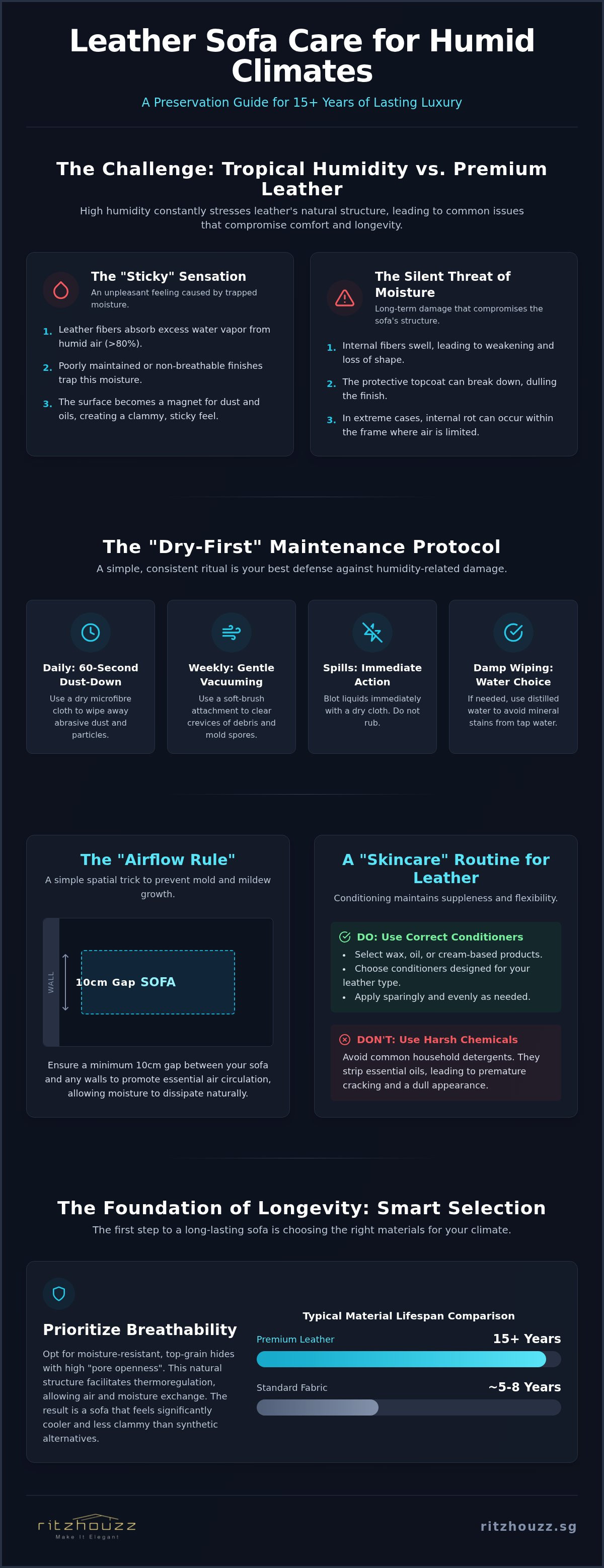
- Adopt a "Dry-First" maintenance protocol using microfibre tools, which is the most effective method for how to care for a leather sofa in a humid climate.
- Prevent mold and mildew by applying the "Airflow Rule," ensuring a 10cm gap between your furniture and walls to promote essential circulation.
- Learn to select the correct wax, oil, or cream-based conditioners to keep your sofa's texture supple and flexible through a "skin care" inspired routine.
- Discover why selecting moisture-resistant hides and utilizing professional interior design consultancy is the first step toward a sofa that lasts 15 years or more.
Understanding the Impact of Tropical Humidity on Premium Leather
Natural leather is a living, breathing material that responds to its environment with remarkable sensitivity. In Singapore, where humidity levels frequently exceed 80%, the cellular structure of these hides undergoes constant stress. When the air is saturated with moisture, the organic fibers of the leather absorb water vapor, which can alter the physical integrity of the material over time. This interaction is the foundation of understanding how to care for a leather sofa in a humid climate, as the goal is to balance the hide's natural moisture content without letting it become a reservoir for dampness. Ambient temperature also plays a vital role; while warm air can make leather feel more pliable, it also increases the rate at which it absorbs environmental moisture, making climate control a priority for any luxury interior.
The unpleasant "sticky" sensation many owners describe isn't merely a byproduct of heat. It occurs when moisture becomes trapped between the skin and a non-breathable or poorly maintained finish. Premium models like the Aura 87211 Sofa utilize high-quality hides that allow for better air exchange, reducing that clammy feeling and ensuring the seating remains inviting. When leather cannot "exhale" the moisture it absorbs, the surface becomes a magnet for dust and oils, leading to a breakdown of the protective topcoat and a loss of that signature supple texture.
Breathability and Thermoregulation
Top-grain leather possesses a natural pore structure that facilitates thermoregulation, making it significantly cooler than synthetic alternatives in tropical settings. These open pores allow for a subtle exchange of air and moisture, preventing the build-up of heat that often plagues faux-leather or heavily coated materials. At RitzHouzz, we select hides that prioritize this "pore openness," ensuring that durability doesn't come at the expense of airflow. This careful curation ensures that your sofa remains a sanctuary of cool comfort, even when the external environment is stifling. Properly maintained pores act as a natural ventilation system for your furniture.
The Silent Threat of Excess Moisture
While leather needs a baseline level of moisture to remain supple, excessive humidity can cause the internal fibers to swell and eventually weaken. If left unchecked, this swelling can lead to a loss of shape or, in extreme cases, internal rot within the sofa frame where air circulation is limited. Adhering to professional leather conservation principles is essential to prevent these environmental stressors from compromising the sofa's structural longevity. Leather is essentially a hygroscopic material that naturally attracts and holds water molecules from the surrounding atmosphere, requiring proactive management to maintain its pristine state.
The Essential Maintenance Protocol for High-End Leather Upholstery
Preserving the integrity of a premium hide requires a shift in perspective; maintenance is not a chore but a rhythmic ritual of stewardship. In an environment where the air itself is heavy, the "Dry-First" philosophy becomes your most reliable strategy. Microfibre cloths are indispensable tools in this process, as their unique fibers lift away microscopic debris and skin oils without the need for excessive moisture. This refined approach is the cornerstone of how to care for a leather sofa in a humid climate, ensuring that you don't inadvertently introduce the very dampness you seek to manage. While it's tempting to reach for common household detergents, these harsh chemicals often strip away the essential oils that keep leather supple, leading to premature cracking and a dull appearance. Immediate spill management is equally critical; in high-humidity rooms, liquid can penetrate pores more rapidly, making a swift, blotting motion with a dry cloth your first line of defense.
Daily and Weekly Upkeep
Consistency is the secret to a pristine living environment. A simple 60-second daily dust-down prevents abrasive particles from settling into the grain, where they can act like sandpaper over time. On a weekly basis, employ a vacuum cleaner with a soft-brush attachment to gently clear the crevices. This step is vital because it removes organic matter and mold spores before they have the chance to colonize in the humid air. When a damp wipe is necessary, always choose distilled water over tap water. Tap water often contains minerals that can leave unsightly white rings or permanent staining on delicate finishes. By maintaining proper humidity levels alongside this routine, you ensure the leather remains a hygienic, hypoallergenic sanctuary for your family.
The Monthly Deep Clean
Once a month, your furniture deserves a more thorough engagement to restore its natural luster. You'll know it's time for a specialized leather soap when the surface begins to lose its sheen or feels slightly tacky to the touch. For a piece as exquisite as the Alladin 87186, use a gentle, pH-balanced cleaner applied with a soft sponge in circular motions. The goal is to lift deep-seated impurities without saturating the hide. After cleaning, the "buffing" technique is essential; use a clean, dry microfibre cloth to polish the surface, which reactivates the leather's natural oils and restores its sophisticated glow. Always allow the sofa to air dry naturally in a well-ventilated room. Never use a hairdryer or direct heat, as these can cause the fibers to shrink and become brittle, undoing the benefits of your careful labor. If you're looking to elevate your home with furniture that responds beautifully to this level of care, you might enjoy browsing the bespoke options at RitzHouzz.
Combating Mold and Mildew: Advanced Prevention Strategies
Mold is a living organism that finds a perfect sanctuary in the organic proteins of natural leather hides. In tropical regions, the combination of high moisture and stagnant air creates an ideal breeding ground for spores. Understanding the biological vulnerability of your furniture is central to how to care for a leather sofa in a humid climate. One of the most effective, yet often overlooked, strategies is the "Airflow Rule." By maintaining a 10cm gap between your sofa and the wall, you prevent the pocket of dead air where moisture typically accumulates. This simple adjustment ensures that air circulates freely around the entire piece, significantly reducing the risk of fungal growth.
To truly preserve your investment, you should aim for the "Supple Zone," which is a humidity range between 50% and 60%. Utilizing a dehumidifier or consistent air conditioning helps stabilize the environment, preventing the hide from absorbing excess vapor. Early-stage mold often appears as a faint, white filmy residue that can be mistaken for dust; however, unlike dust, it may have a slightly musty odor and will reappear shortly after a simple wipe if the underlying spores aren't addressed. Vigilance in these early stages prevents the need for more invasive restoration later.
Strategic Furniture Placement
Effective prevention begins long before the first cleaning. Avoiding "cold spots" in your living room, such as areas near large glass windows where condensation is prone to occur, is essential for long-term furniture health. This level of environmental planning is a core component of professional residential interior design Singapore. By positioning your sofa in a well-ventilated area and using UV-filtering blinds, you can protect the leather from heat-damage while still enjoying natural light. Balancing these elements ensures the hide doesn't experience the temperature fluctuations that lead to moisture buildup.
Emergency Mold Remediation
If you do discover spotting, swift action is required to prevent the mold from penetrating deep into the hide's pores. A gentle solution of one part white vinegar to one part distilled water can safely neutralize surface spores on most protected leathers. It's vital to test this on an inconspicuous area first. If the mold has already begun to change the texture of the leather or if the odor persists, it's time to call a professional restorer. DIY efforts on delicate aniline leathers can often cause more harm than good. Following any remediation, post-treatment conditioning is vital. This step replenishes the moisture lost during the cleaning process, ensuring the leather doesn't become brittle. Maintaining a pristine environment remains the ultimate secret to leather care in tropical climates.
Conditioning and Restoration: Preserving the Supple Texture
Thinking of leather as a secondary skin is the most effective mental model for how to care for a leather sofa in a humid climate, as it highlights the necessity of maintaining a delicate moisture balance. While high humidity is a primary concern, the frequent use of air conditioning in Singaporean homes creates a secondary challenge: it strips the air of moisture, causing natural hides to become parched and brittle. Establishing a quarterly conditioning routine is a non-negotiable aspect of how to care for a leather sofa in a humid climate, ensuring the fibers remain flexible and resilient against the drying effects of constant climate control. You can choose between wax-based conditioners for surface protection, oil-based formulas for deep nourishment, or gentle cream-based options for regular maintenance.
To determine if your furniture requires immediate attention, perform a simple "pinch test." Gently grasp a small section of the leather between your fingers; if it displays fine, elastic wrinkles that disappear instantly when released, the hide is well-hydrated. However, if the leather feels stiff or the wrinkles linger, it is a clear sign that the natural oils have depleted and restoration is necessary. Regular testing allows you to stay ahead of the "dry-out" phase, preserving the luxurious feel of your investment before visible cracks appear.
Selecting the Right Conditioner for Your Grade
Different finishes require distinct approaches to restoration. Aniline leathers, prized for their natural beauty and open pores, require specialized oils or light creams that penetrate deeply without altering the hide's characteristic patina. In contrast, pigmented or protected leathers benefit from surface-level creams that reinforce their existing protective barrier. Silicon-based products are a forbidden choice for luxury sofas; they create a plastic-like seal that prevents the leather from breathing, eventually leading to internal decay and surface peeling. To maintain the buttery feel of the Aura series, we recommend a high-quality, pH-balanced cream that nourishes the fibers while preserving the material's natural thermoregulation properties.
The Art of Application
The actual application of conditioner follows the "less is more" rule. Over-conditioning can clog the leather's pores, leading to a heavy, sticky residue that attracts dust and promotes mold growth in tropical air. Apply a small amount of product to a clean microfibre cloth first, then work it into the leather using gentle, circular motions. Buffing techniques also play a role in the final aesthetic; a soft, dry cloth can be used to achieve a matte finish, while more vigorous buffing can restore a sophisticated, glossy sheen to the surface. Ideally, the sofa should remain undisturbed for 24 hours to allow the conditioner to fully integrate into the hide's cellular structure. If you are ready to invest in a piece that rewards this level of attention, we invite you to explore our customized leather collections at RitzHouzz.
Selecting and Customising for Longevity: The RitzHouzz Approach
The journey toward a lasting investment starts long before the first conditioning treatment is applied. Choosing the right material is roughly 70% of the battle when considering how to care for a leather sofa in a humid climate. At RitzHouzz, we prioritize hides that offer natural resilience against tropical stressors, ensuring that your furniture remains a source of pride rather than a maintenance burden. The Alladin 87186 Sofa is a prime example of a model designed for refined comfort and extreme durability, even in high-traffic homes. Our integrated interior design consultancy ensures that your furniture isn't just a purchase but a strategically placed component of a climate-resilient living space. Proper space planning allows for the essential airflow discussed in previous sections, making it the foundational step in professional leather care.
A sophisticated home is built on a foundation of quality and intentionality. High-end leather is naturally hypoallergenic, which is a significant advantage in humid climates where dust mites and allergens frequently thrive in standard fabric upholstery. By selecting a hide that is suited for the Singaporean environment, you're not just buying a sofa; you're curating a healthier and more comfortable living experience for your family. This methodical approach to selection ensures that the beauty of the piece is matched by its practical performance over time.
Bespoke Leather Selection
Navigating our extensive catalog allows you to select finishes that perform optimally in the tropics. For families with pets or children, we often suggest semi-aniline leather as a versatile solution. This grade offers a thin, protective layer that resists spills and moisture while retaining the breathability and cooling properties of the hide. Beyond the surface, we offer bespoke customization for internal frames and padding. This ensures that the structural integrity of your sofa remains as pristine as the leather itself, preventing the sagging or internal dampness that can plague lesser-quality furniture.
The Sanctuary Experience
Creating a harmonious home environment extends beyond the living room. Complementing your seating with premium bedroom furniture Singapore creates a cohesive sanctuary that values both aesthetics and longevity. Holistic home care involves a commitment to excellence across every room, ensuring each piece is treated with the respect a luxury item deserves. By following a steady, methodical maintenance schedule, your sofa will remain a supple and inviting presence for 15 years or more. We invite you to Visit our showroom to experience the suppleness of our curated leather collection and consult with our expert guides on tailoring a piece for your unique home environment.
Cultivate a Legacy of Refined Comfort
Preserving the pristine beauty of your furniture is a rewarding journey of stewardship that elevates the atmosphere of your home. By mastering how to care for a leather sofa in a humid climate, you transform a high-ticket investment into a lifelong companion. The secret lies in the harmony between meticulous environmental control, such as maintaining the "Supple Zone," and a rhythmic maintenance protocol that respects the hide's natural breathability. As an authorized Lady Americana retailer, we believe that excellence begins with the selection of premium, moisture-resistant materials tailored to your specific lifestyle.
Our expert interior design consultancy is ready to help you plan a climate-resilient space that protects your bespoke furniture customization for years to come. Discover the Aura 87211 and Alladin 87186 at RitzHouzz to experience the pinnacle of tropical luxury. Your home deserves a centerpiece that matures with grace; with these professional strategies, your leather sofa will remain a supple, sophisticated sanctuary for decades to come.
Frequently Asked Questions
Is a leather sofa better than fabric for Singapore’s humidity?
High-quality leather is generally superior to fabric in tropical environments because it is naturally hypoallergenic and doesn't trap moisture. While fabric tends to absorb ambient dampness and harbor dust mites, premium leather provides a cooling surface that remains much easier to sanitize. It's an excellent choice for maintaining a hygienic and sophisticated home in Singapore's intense humidity.
How often should I condition my leather sofa in a tropical climate?
You should aim to condition your furniture every three months to counteract the drying effects of frequent air conditioning. While some global guides suggest a biannual routine, the high-intensity environment of the tropics requires more regular hydration to prevent the hide from becoming brittle. This is a vital part of how to care for a leather sofa in a humid climate and ensures the material remains supple.
Why does my leather sofa feel sticky in the afternoon?
That "sticky" sensation occurs when moisture and skin oils become trapped against the leather's surface, particularly if the pores are clogged with dust or improper cleaning products. In the afternoon heat, this lack of breathability prevents proper thermoregulation. Regular dusting with a dry microfibre cloth helps maintain the material's natural ability to "breathe," restoring a smooth and comfortable seating experience.
Can I use baby wipes to clean my leather sofa?
No, you shouldn't use baby wipes as they often contain chemicals and pH levels that are incompatible with premium hides. Repeated use can strip the leather's protective topcoat, leading to premature peeling or a dull finish over time. Instead, use a pH-balanced leather cleaner specifically formulated for luxury furniture to ensure the material's longevity and aesthetic integrity are preserved.
How do I remove mold from my leather sofa safely?
To remove surface mold safely, use a gentle solution of one part white vinegar to one part distilled water. Lightly dampen a cloth and wipe the affected area, then immediately dry the surface with a clean microfibre tool. If the mold has penetrated deep into the pores or covers a large area, we recommend seeking professional restoration services to avoid damaging the delicate grain.
Will direct sunlight through my window ruin my leather sofa?
Direct sunlight can cause significant damage by fading the pigments and evaporating the natural oils that keep leather flexible. Over time, this leads to unsightly discoloration and structural cracking. We suggest using UV-filtering blinds or positioning your sofa away from windows to protect the hide while still allowing your living space to feel bright and airy.
What is the best humidity level for a leather living room set?
The ideal humidity range for preserving leather is between 50% and 60%. This "Supple Zone" prevents the material from absorbing excess moisture that leads to mold, while also ensuring the environment isn't so dry that the fibers become brittle. Maintaining this balance is a core principle in how to care for a leather sofa in a humid climate effectively.
Do I need to leave my air conditioner on for my furniture?
You don't need to keep your air conditioner running 24/7, but consistent air circulation is essential for furniture health. When the AC is off, using a dehumidifier or ensuring a 10cm gap between the sofa and the wall helps prevent stagnant air from fostering mold growth. A balanced approach to ventilation ensures your investment remains in pristine condition without excessive energy use.