

How to Mix and Match Dining Chairs: A Practical Styling Guide
Dining chairs don’t need to match to make a room feel cohesive. It’s natural to worry that different shapes, finishes or fabrics will look accidental, especially in an open-plan HDB flat or condominium. The key to how to mix and match dining chairs is to repeat one deliberate element, such as colour, material or silhouette, while letting other details vary.
This approach adds visual interest without losing a sense of order. It also gives you a practical way to assess the chairs as part of a complete dining arrangement, rather than choosing each one in isolation. The table’s shape and scale, the room’s available space and your everyday needs all matter as much as appearance.
In this guide, you’ll learn how to choose a unifying detail, combine chair styles with confidence and check that your selection suits your table and room. You’ll also find space-conscious considerations for Singapore homes, so your dining area feels considered, comfortable and easy to move through.
Key Takeaways
- For how to mix and match dining chairs, repeat one clear feature, such as colour, silhouette, material or finish, and vary the others deliberately.
- Choose an anchor that relates to your dining table and the wider room, then use it to guide your chair selections.
- Compare layouts such as matching pairs, distinct end chairs or a more varied mix to find an arrangement that feels balanced around your table.
- Before browsing, note your room’s palette, table shape and practical needs so you can assess each combination as a whole.
- Check the finished arrangement for visual cohesion, comfort and room to move, then explore dining furniture options that suit your home.
How to Mix and Match Dining Chairs Without Losing Cohesion
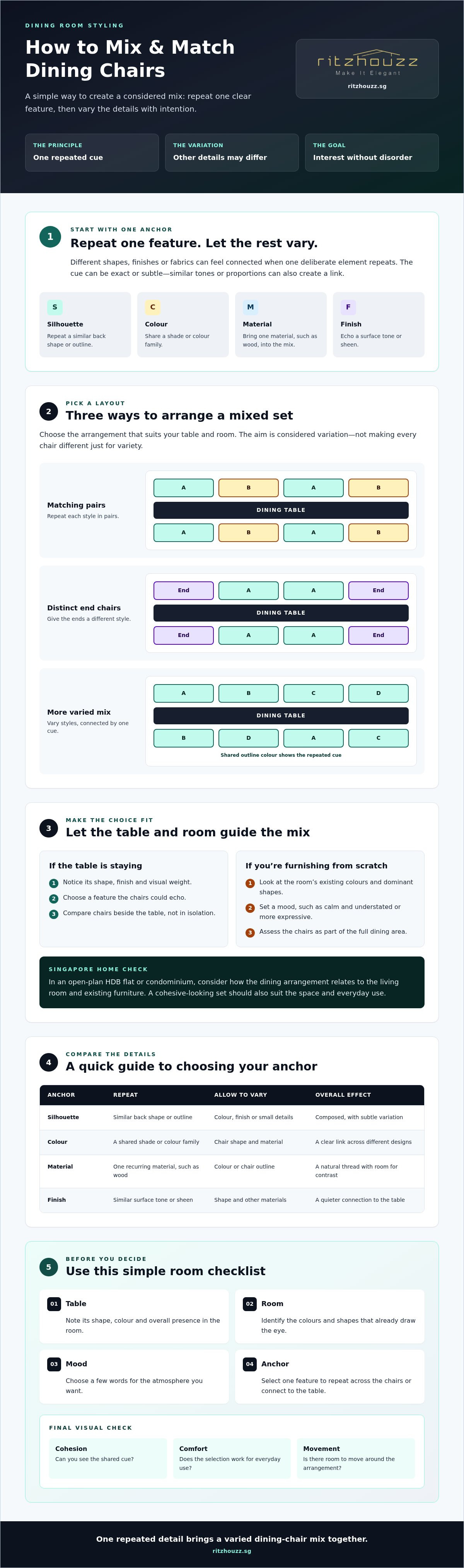
Different dining chairs feel intentional when a repeated element connects them. That anchor might be a shared colour, a similar silhouette, a consistent finish or comparable visual weight. The chairs can vary in other ways, but the repeated cue gives the eye a relationship to follow. This is the central principle behind how to mix and match dining chairs without making the arrangement look accidental.
Contrast is optional, not a requirement. You could combine two chair styles and repeat each in pairs, or choose chairs with similar outlines in slightly different finishes. A single distinctive chair can also work if its colour or shape relates to something else in the dining area. Aim for considered variation rather than making every chair different simply for the sake of variety.
What makes a mixed dining-chair arrangement feel intentional?
Cohesion comes from the visible relationship between the chairs, the table and the surrounding room. A repeated cue helps establish that relationship: chairs with different frames might share a finish, while varied silhouettes can feel connected through a common colour. The cue need not be exact; similar tones or proportions can create a subtler link. A matching set is only one way to achieve a coordinated dining area.
Chairs also have a long history of varied forms and purposes. For a broader overview of the history and design of chairs, consider how different shapes and construction details contribute to a chair’s character. This can help you describe what you’re drawn to without assuming every piece must look alike.
Choose a starting point before selecting chairs
If your dining table is staying, begin with it. Notice its shape, finish and visual weight, then decide which feature the chairs could echo. If you’re furnishing from scratch, look at the room’s existing colours and dominant shapes. In either case, settle on a mood, such as calm and understated or more expressive, before comparing individual chair styles.
This is especially useful in Singapore homes, where the dining area may share an open-plan space with the living room or serve several everyday purposes. An arrangement that looks cohesive on its own can feel disconnected if its colours or shapes compete with the rest of the room. Step back and consider the full view, including how the table and chairs relate to existing furniture.
Before browsing, note what is fixed and what can change. A short checklist can keep your decisions focused:
- Table: Record its shape, colour and overall presence in the room.
- Room: Identify the colours and shapes that already draw the eye.
- Mood: Choose a few words to describe the atmosphere you want.
- Anchor: Select one feature to repeat across the chairs or connect to the table.
With this starting point, you can compare dining-chair options as part of a complete setting. The result can feel distinctive without being disjointed, and practical without relying on a uniform set.
Choose What to Match: Shape, Colour, Material or Finish
When considering how to mix and match dining chairs, choose one feature to repeat and let the others provide controlled variation. The best anchor depends on the table. A visually simple table may suit more expressive chair shapes, while a distinctive table can benefit from chairs that echo one of its colours or finishes.
Use this comparison to decide where to begin:
| Anchor | What to repeat | What may vary | Effect |
|---|---|---|---|
| Silhouette | Similar back shape or overall outline | Colour, finish or small details | A composed look with subtle variation |
| Colour | A shared shade or colour family | Chair shape and material | A clear visual link across different designs |
| Material | One recurring material, such as wood | Colour or chair outline | A natural thread with room for contrast |
| Finish | A similar surface tone or sheen | Shape and other materials | A quieter connection to the table |
Use chair shape and visual weight to create balance
Compare back height, leg shape and overall visual presence, not just the chair’s style label. Similar silhouettes with different details can feel restrained; clearly different silhouettes can work when another cue, such as colour, repeats. Look at chairs beside the table rather than judging them separately. A visually substantial table may feel balanced with chairs of comparable presence, while a lighter-looking table can be overwhelmed by bulky forms.
Coordinate colour, material and finish with care
A shared colour family can link chairs with different outlines. For example, chairs in related warm neutrals may read as connected even if their shapes differ. Contrasting materials can also feel deliberate: picture wood alongside upholstered seats, with a repeated tone tying the combination together. These are styling examples, not specifications for a particular furniture range.
Check finishes in the room where the table will sit. A wood tone that looks harmonious in one setting may appear different beside your own table and flooring, while a strong colour can shift the room’s visual balance. If your table has a distinctive finish, echoing it in the chairs can create continuity. If it is understated, a measured contrast may add definition. Consider the surrounding palette too, especially in an open-plan HDB or condominium dining area where the chairs remain visible from the living space.
Before deciding, compare the full combination from more than one viewpoint. RitzHouzz offers dining furniture, including dining tables and dining table sets with chairs. To ask about options, contact RitzHouzz about dining furniture.
Compare Mixed-Chair Layouts for Your Dining Table and Room
A chair combination can look balanced in more than one arrangement. Matching pairs add rhythm, contrasting chairs at the ends can draw attention to the table, and a deliberate mix offers a less formal feel. The right choice depends on the table’s shape, the chairs’ visual presence and how people move through the dining area.
| Arrangement | Visual effect | Planning consideration |
|---|---|---|
| Matching pairs | Creates repetition with room for limited variation | Check that the pairs sit comfortably along the table sides |
| Distinct end chairs | Gives the table ends a focal point | Assess whether the room has space for the added visual emphasis |
| Deliberate mix | Feels more varied and collected | Keep a consistent cue so the overall arrangement still relates |
When do matching pairs or contrasting end chairs work?
Matching pairs can establish a steady rhythm, particularly along the sides of a rectangular table. You might vary one detail while keeping the pairs visually related, rather than introducing a different design at every place. Distinct end chairs offer another option: their shape or colour can set them apart, while the side chairs provide a calmer counterpoint. This can create a focal point, but the effect depends on the table and surrounding room.
Before settling on either layout, view the table from across the room. Consider whether the end chairs relate to other prominent shapes or colours nearby, and whether the arrangement feels balanced from the main sightlines.
How should a chair mix relate to table shape and room size?
A round table has a central focus, so check how chair backs and outlines sit around its curved form. A rectangular table has clear sides and ends, which can make paired side chairs or a distinct end-chair arrangement easier to assess. These are starting points, not fixed rules. Let the table’s proportions and the actual chair shapes guide the final decision.
In an HDB, BTO or resale flat, or a condominium with an open-plan dining area, check the layout in place before choosing. Pull chairs out as if someone were sitting down, then see whether they interfere with a walkway, nearby furniture or another everyday use of the room. Consider how people pass behind seated diners too. A mix that looks appealing in a product photo may feel crowded beside a sofa or storage unit.
To compare how to mix and match dining chairs in your own space, sketch the table and nearby furniture, then mark where each chair will sit and move. This makes it easier to judge visual rhythm and practical circulation before committing to an arrangement.
Follow a Simple Process to Mix and Match Dining Chairs
A clear sequence makes it easier to compare options without getting distracted by individual chair details. Before browsing, record your table’s shape and finish, the room’s main colours and your household’s practical needs. This gives you a useful reference for how to mix and match dining chairs in a way that suits the whole space.
- Assess the room. Note what is staying, including the dining table and nearby furniture. Consider how people use the area and where chairs need to move.
- Choose an anchor. Use the table or room palette as your starting reference, then select one feature to repeat, such as colour, silhouette or finish.
- Select variation. Decide which other details can differ. Keep the variation deliberate so the chairs don’t compete with the table or surrounding furnishings.
- Test the arrangement. Compare chair options side by side. If available, use room photos or samples to assess how colours and finishes relate to your actual space.
- Review the whole setting. Look at the arrangement from different viewpoints and consider both its appearance and daily use before deciding.
Build a shortlist around one consistent design cue
Start with what is fixed. If you’re keeping the table, let its shape, colour or finish inform your shortlist. If you’re choosing furniture for a new room, use the existing palette and dominant shapes as your guide. Select one feature to repeat, then limit variation to other details. Comparing candidate chairs side by side makes their similarities and contrasts easier to judge than assessing each option separately.
Test the mix in the real room before committing
Check your shortlist against the room’s actual furniture, colours and available circulation. Where possible, position options beside the table or review them in a photo of the dining area. Look at the combination from the entrance and adjoining living space as well as from the table. Confirm product details directly with the retailer rather than assuming dimensions, materials or other specifications.
Use this final check before making a choice:
- Proportion: Do the chairs feel suited to the table’s scale?
- Visual balance: Does the mix look considered from more than one viewpoint?
- Movement: Can chairs be pulled out without disrupting walkways or nearby furniture?
- Everyday use: Does the arrangement suit the household’s regular dining needs?
For help exploring dining furniture options, enquire with RitzHouzz about dining furniture.
Bring Your Dining-Chair Mix Together with a Thoughtful Furniture Choice
A cohesive dining area doesn’t depend on every chair matching. Repeat one considered element, vary other details with intention, then assess the table and chairs in the context of the full room. This keeps the look connected while leaving space for contrast, whether you’re furnishing a new home or refreshing a dining area in an HDB flat or condominium.
Thinking about how to mix and match dining chairs is also a useful way to compare furniture as a complete arrangement, rather than selecting each piece in isolation. RitzHouzz offers dining furniture, including dining tables and dining table sets with chairs, for homes in Singapore.
What to prepare before comparing dining furniture
A little preparation can make it easier to discuss options and judge whether they suit your space. Gather what you have available, then use these details to guide your comparison:
- Table: Note its shape and, if available, key measurements.
- Room: Take photographs that show the dining area and nearby furniture.
- Look: Record preferred colours and finishes, along with how much contrast you want.
- Use: Consider who uses the dining area and how much room is needed to move around the table.
These details help keep the decision grounded in your actual layout. A photo, for example, may reveal colours or neighbouring furniture that are easy to overlook when comparing chairs individually. Measurements, if available, can also help you ask more focused questions about fit. They don’t replace confirming product specifications directly.
Ask about options that suit your dining space
When you enquire, describe the table you’re keeping or the kind of dining arrangement you’re planning. Ask which current dining furniture options could suit your preferred layout, and verify any details you need before deciding. Don’t assume a particular chair design, material, dimension or option is available without confirmation.
With your room details in hand, you can compare the available choices against the same criteria: a coordinating feature, deliberate variation, proportion and everyday movement. Enquire with RitzHouzz about dining furniture and share your table details or describe your dining space to help guide the conversation.
Create a Dining Arrangement That Feels Like Yours
A successful mix doesn’t depend on making every chair different. The guiding principle for how to mix and match dining chairs is simple: repeat one visual element, vary other details with intention, then review the chairs with the table and room together. Choose an arrangement that suits your table, and check that it leaves comfortable room for everyday movement.
Before comparing options, note your table’s shape, the room’s palette and your household’s practical needs. Photos and measurements can help you discuss how potential choices might fit, but confirm product specifications directly. A considered shortlist makes it easier to identify combinations that feel balanced, not just striking on their own.
RitzHouzz offers dining furniture, including dining table sets with chairs. Visit the RitzHouzz showroom to explore dining furniture options, and enquire about dining furniture for your space. Share your table details and describe your room to help guide the conversation. With a clear anchor and a thoughtful review of the full room, you can choose a dining arrangement that feels coordinated, practical and personal.
Frequently Asked Questions
Can you mix different styles of dining chairs around one table?
Yes, different dining-chair styles can work around one table if the arrangement has a deliberate point of connection. For example, you might combine distinct chair shapes while repeating a colour or finish. Matching pairs can also introduce variety without making every seat different. Consider the table’s character and the room around it, then judge the complete arrangement rather than each chair on its own.
How do you make mismatched dining chairs look cohesive?
Repeat one visible feature, such as colour, silhouette, finish or material, and vary other details with intention. For example, chairs with different outlines may feel connected through a shared colour family. Check that their visual weight also works with the table. In an open-plan dining area, look at the chairs alongside nearby furniture so the mix relates to the wider room.
Should dining chairs match the dining table?
No, dining chairs don’t have to match the table exactly. They should relate to it in a considered way, perhaps through a similar finish, a complementary colour or balanced visual proportions. A strong contrast can also work if it feels intentional in the room. Before choosing, compare the table and chairs together, and check that their shapes and scale don’t compete.
How many different dining chair styles should you mix?
There’s no fixed number of styles that suits every table or room. A restrained approach, such as using two related chair designs or setting distinct chairs at the table ends, can introduce contrast while preserving visual order. More variation may suit some spaces, but assess each chair against a repeated cue. The arrangement should look considered from the main views of the room.
Can different dining chairs work with a small dining area?
Yes, a mixed arrangement can suit a compact dining space if the chairs allow people to sit, stand and move comfortably. Compare their overall visual presence with the table and nearby furniture. Chairs that can be tucked under the table may help preserve usable floor area, depending on their design and the table. Test the layout in your HDB flat or condominium before deciding.
What should you consider when mixing chairs around a round dining table?
Consider how each chair’s outline sits around the table’s curved edge and whether the arrangement feels balanced from different viewpoints. A shared colour or similar visual weight can connect varied silhouettes without requiring identical chairs. Then check how the chairs move in and out, and whether they interrupt walkways or sit too close to nearby furniture. Let your room layout, rather than a general rule, guide the final choice.
Do mixed dining chairs have to be the same colour?
No, the chairs can differ in colour. To keep the combination cohesive, repeat another element, such as a similar silhouette, material or finish. Alternatively, choose shades from a related colour family rather than unrelated tones. Compare the colours beside the actual table and room palette, since nearby finishes and furnishings affect how the overall mix appears.
How do I choose mixed dining chairs for my home?
Start with the table and room, then choose one feature to repeat and decide which details can vary. Compare the options together, check proportions and assess movement around the table. Photos and measurements can help you explain your layout when asking about dining furniture. RitzHouzz offers dining furniture, including dining table sets with chairs. Confirm current options and product details directly before choosing.
Disclaimer
The information in this article is provided for general guidance only and is intended to help readers make informed decisions about mattresses, furniture, renovation, carpentry and related home solutions. Product specifications, prices, promotions, availability, warranties and services may change without notice. Actual colours, materials, dimensions and comfort may vary from images or descriptions. For renovation, carpentry or space-planning projects, final recommendations, measurements, scope of work and quotations should be confirmed directly with RitzHouzz before proceeding. Mattress comfort and suitability are subjective, and any health-related information is general in nature and should not be treated as medical advice. Please contact RitzHouzz or visit our showroom for the latest product and service information.