

Furniture to Impress Guests: Practical Home Buying Guide
The most impressive home for guests isn’t necessarily the one with the largest sofa or grandest dining table. Thoughtful furniture to impress guests makes a stronger first impression through comfort, good proportions and an easy flow from room to room.
In an HDB flat, BTO home, resale flat or condo, a statement piece can feel out of place if it crowds a walkway or leaves little room for everyday life. The aim is to make your home welcoming when friends visit without making it difficult to live in between gatherings.
This guide explains how to choose a sofa and dining furniture that suit your room, hosting habits and daily routines. You’ll also find a practical way to measure and plan your layout, compare flexible furniture options, and decide what to prioritise. Start with the pieces that will make the biggest difference, rather than furnishing every room at once.
Key Takeaways
- Choose furniture to impress guests by balancing comfort, clear movement and a considered focal point, not by making the room feel like a display.
- Compare sofas and dining furniture by how they support hosting, everyday routines and the space available in your home.
- Decide whether one focal piece or several coordinated pieces will better suit your household’s use and the room’s visual balance.
- Plan in sequence: identify your hosting needs, measure the room, map circulation and then shortlist furniture for your HDB, BTO, resale flat or condo.
- Bring your measurements and a clear shortlist of priorities when enquiring about RitzHouzz sofas, dining furniture, custom furniture or space planning.
Furniture to Impress Guests Starts with a Welcoming, Usable Room
A welcoming room balances comfort, clear movement and a considered focal point. The aim isn’t to create a display room. It’s to make a home where guests feel at ease and the furniture still supports your household’s routines after they leave. In HDB flats, BTO and resale homes, and condos, that means choosing pieces for the actual layout rather than appearance alone.
A useful principle is simple: guest-ready furniture supports comfort, conversation and circulation. Guests should be able to settle in, speak comfortably with one another and move around without awkwardly navigating crowded pathways. The sofa should also suit ordinary evenings, while dining furniture should remain practical for everyday meals. A room that works well every day tends to feel more naturally welcoming when company arrives.
What makes a room feel thoughtfully furnished?
A considered room has a clear relationship between its seating, dining furniture and available space. A sofa can anchor a living area, while a dining table gives meals and conversation a natural centre. For an overview of how furniture serves different purposes in a home, explore this history and types of furniture.
Choose one focal point, such as the main seating arrangement or dining setting, then let other pieces support it. Filling every visible gap can make a room feel crowded rather than complete. Instead, consider the route from the entrance, where guests might sit, whether people can talk comfortably, and how they’ll reach other areas. A sofa for your living space should feel integrated with the room, not like an obstacle placed in its centre.
Start with the way you host
Think about what visits usually involve. Do guests gather for conversation, sit down for shared meals, or occasionally stay overnight? Your answer helps clarify which furniture deserves priority. A conversation-led home may benefit most from sociable seating. Frequent shared meals point to a dining setting that suits both guests and regular household use. If visits sometimes include an overnight stay, consider flexible furniture without allowing an occasional need to dominate the whole room.
- Conversation: Arrange seating so guests can face one another and join the discussion naturally.
- Shared meals: Choose dining furniture that suits the room and how your household eats day to day.
- Flexible visits: Consider how the room can adapt while remaining useful between gatherings.
This approach keeps the decision grounded in real habits. Rather than buying a full matching set or adding furniture simply because a corner looks empty, identify the gathering you most want to make comfortable. Then choose pieces that serve that purpose while preserving the room’s ease and balance.
Compare Guest-Ready Sofas and Dining Furniture by Comfort and Use
A sofa or dining setting can shape a room’s first impression, but its value also shows in how well it fits ordinary routines. Compare each option by its role when hosting, its everyday purpose and its relationship to the available space. The best hosting piece is one that fits both the room and its regular use.
| Furniture | Hosting role | Everyday use | Space considerations |
|---|---|---|---|
| Sofa | Creates a place for guests to sit and talk. | Supports daily relaxing and conversation. | Consider how it fits the room and leaves clear routes around it. |
| Dining furniture | Brings guests together for meals or conversation. | Serves regular household meals and activities. | Allow for seating and movement around the table in its usual position. |
| Extendable dining table | Can provide a flexible setting for occasions with more guests. | Can be kept in its everyday arrangement when extra table space isn’t needed. | Consider both its regular footprint and the space required when extended. |
Choose a sofa that invites conversation
Start with how people will sit and interact, rather than choosing by appearance alone. Fabric and leather sofas offer different surface and visual qualities. A recliner may suit a household that values a relaxed seat, while an L-shaped or modular sofa can shape a shared seating area. A sofa bed offers another use when flexibility matters. No style is automatically right for every home, so compare the options against your room and routines.
A standard sofa is one option; a custom sofa can be considered in relation to your room and preferences. Compare both by how they fit your layout and everyday use, rather than assuming one approach guarantees a better fit. Keep the main route through the room open, and arrange seats so guests can converse without turning away from one another. Browse sofa designs for ideas, and use these ergonomic furniture design principles as a reference when considering how furniture suits the people who use it.
Select dining furniture around the occasion
Round and rectangular tables can each suit a dining area. Consider the room’s shape, surrounding furniture and the paths people use to move through it. Check where chairs will sit and whether guests can take their places without disrupting the rest of the room. A dining set with chairs creates a coordinated setting, while choosing the table and chairs separately lets you assess each piece in context. If you want inspiration for distinctive, handcrafted dining pieces built for entertaining, specialist makers like thetableguy.co.uk show how bespoke woodwork can serve as a welcoming focal point.
An extendable dining table may be worth considering if your household usually eats together in a smaller setting but sometimes hosts larger gatherings. Picture both arrangements before deciding: how the table serves daily meals, where it sits when extended, and whether the expanded layout leaves comfortable space to move. To discuss options, share your room measurements and furniture requirements with RitzHouzz or visit the showroom to explore sofas and dining furniture in person.
Which Furniture Choices Make the Strongest Impression?
The strongest impression comes from furniture that feels intentional and comfortable, not simply striking. One focal piece can give a room character, while several quieter pieces can create a calm, coordinated setting. Neither approach is automatically better. The right choice depends on the room’s role, your household’s habits and whether guests can use the space comfortably.
Before choosing, consider each piece against four questions: does it welcome guests, sit in visual balance with the room, serve more than one occasion, and earn its place in daily life? This makes furniture to impress guests a considered decision rather than a search for the most eye-catching item. A statement sofa may draw attention, but if it narrows the route through a compact living area or makes conversation awkward, its visual impact comes at the expense of the room.
Statement furniture versus a coordinated room
A distinctive sofa or dining setting can anchor a room when its scale and placement suit the space. Let it lead, then keep other furniture supportive in form and purpose. Alternatively, a coordinated arrangement can create an overall impression through the way the pieces relate to one another, without any single item dominating.
Choose the room’s primary role first. If it centres on relaxing and conversation, make the seating arrangement the focus. If meals are the main gathering point, let the dining setting guide the layout. Add secondary furniture only when it supports that use and leaves the room feeling composed rather than crowded.
Comfort and versatility versus visual impact
Furniture chosen mainly for appearance can feel less successful if it doesn’t suit the way your household lives. Consider how often a seat or table will be used, whether guests can settle in comfortably and whether the layout still works during an ordinary day. A modular or space-efficient sofa may be worth exploring when a room needs flexibility, but its suitability depends on the layout and your priorities.
Look beyond the first impression. A good choice should feel welcoming during a gathering and remain useful when the room returns to its usual routine. Exploring different sofa designs for your home can help you compare how seating shapes the overall interior.
- Guest comfort: Does the piece make it easy to sit, talk or share a meal?
- Visual balance: Does it complement the room, or compete with everything around it?
- Versatility: Can it suit more than one kind of gathering or household activity?
- Everyday use: Will your household use it regularly between visits?
If a piece scores highly for appearance but poorly for movement or everyday use, reconsider its place or choose a quieter alternative. A composed room doesn’t require every item to make a statement. Each piece should contribute comfortably and purposefully.
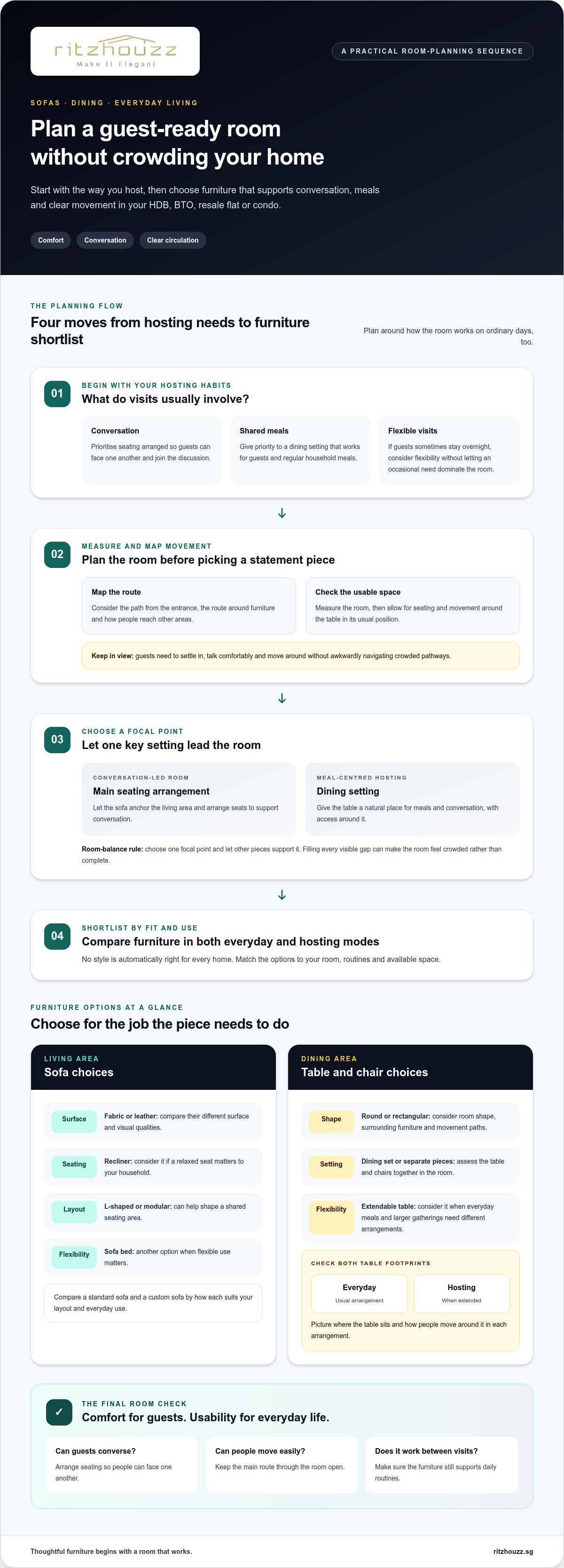
Plan Furniture for Guests in HDB, BTO, Resale, and Condo Homes
Furniture that suits an HDB, BTO, resale flat or condo depends on the actual floor plan, not just the home type. Room shape, fixed features, entrances and household routines all affect what will fit and how comfortably people can move around. This simple planning sequence can help you shortlist furniture to impress guests without letting occasional visits dictate the entire layout.
- Identify your hosting needs. Decide whether gatherings usually centre on conversation, shared meals or a mix of activities. Note which existing pieces support those occasions and what feels missing. This helps you focus on a sofa, dining furniture or another practical category instead of buying pieces without a clear purpose.
- Measure the room and access routes. Record the usable floor area, then note doorways, entrances, fixed features and routes between rooms. Think beyond where the furniture will sit: consider how it will be brought into the home and moved through access routes. The room measurement alone may not tell the whole story if the path to it is restricted.
- Map circulation. Sketch the room or mark the furniture footprint on the floor. Trace how people will enter, reach seats, move between living and dining areas, and pass through the room. If a chair or sofa would interrupt a regular route, adjust the arrangement before shortlisting pieces.
- Shortlist furniture. Compare options against the measurements, movement paths and everyday purpose you’ve identified. Keep only pieces that serve a clear role and suit the way your home is used between gatherings.
Measure the room before choosing furniture
Measure the available floor space and note the position of doors, walkways and fixed features before browsing. Include the space needed to use chairs and approach seating or dining furniture. A clear sketch with measurements can help you discuss how a piece might fit. Also note narrow passages, turns and other parts of the route from the entrance to the intended room. Bring these details when enquiring so the conversation can focus on your actual layout.
Make hosting work in compact or flexible spaces
When one area serves several purposes, consider multifunctional or space-efficient furniture. The right choice depends on how the room works day to day. A sofa should suit regular household use, while dining furniture needs to fit everyday routines as well as meals with guests. If your entertaining space extends to an outdoor balcony or patio, looking through curated design arrangements from outdoor retailers like Tropicraft Patio can provide inspiration for making open-air seating just as inviting. There’s no single room-size rule that determines the right piece: the arrangement, fixed features and paths through the space all matter.
For broader residential planning, RitzHouzz provides interior design and space-planning services to help relate furniture choices to your home’s layout. To discuss suitable options, send RitzHouzz your floor plan or room measurements along with your hosting needs.
Choose Furniture to Impress Guests with a Considered RitzHouzz Enquiry
A useful furniture enquiry begins with a clear picture of how you host and how your home works between visits. You don’t need to plan every room or settle on a specific piece before starting. A concise shortlist can focus the discussion on furniture that suits your priorities, room layout and everyday routines.
Turn your hosting priorities into a practical shortlist
Start with the kind of gathering you want to make more comfortable. If guests usually come to talk, focus on a seating plan that supports conversation. If shared meals are central, consider dining furniture that fits both the room and your household’s regular meals. If you host in different ways, note which use matters most and which is occasional.
Then capture four points before enquiring:
- Hosting priority: Conversation, shared meals or another regular occasion.
- Room fit: The available space, layout and any features that affect placement.
- Everyday purpose: How the furniture will be used when guests aren’t visiting.
- Furniture category: The sofa, dining furniture or other piece you’d like to consider.
This shortlist keeps the decision selective. You might focus on updating the main seating area or choose a dining setting that better supports your household’s routines. There’s no need to furnish every room at once. Prioritise the piece that addresses a genuine need, then consider other rooms only if they become relevant.
Explore furniture with your room in mind
RitzHouzz offers sofas, dining furniture, custom furniture, and interior design and space-planning services for homes in Singapore. Sharing your room measurements and intended use gives the enquiry a practical starting point. If you’re considering a sofa, describe how the living area is used. For dining furniture, explain your usual routine and how you host. These details help relate the furniture choice to the room rather than treating it as a standalone purchase.
Custom furniture and space planning can also help when a room’s layout calls for a more considered approach. Bring a floor plan or measurements, and note entrances, fixed features and the routes people use through the space. This context is especially useful when a living or dining area needs to support more than one household activity. You can also visit the RitzHouzz showroom to explore furniture choices in person.
Furniture to impress guests doesn’t have to make every room feel newly furnished. A well-chosen sofa or dining setting can make hosting feel more natural while continuing to serve everyday life. Prepare your priorities and measurements, then discuss furniture for your home with RitzHouzz.
Make Your Next Furniture Choice with Confidence
A home’s needs can change over time, so furnishing it needn’t be a one-time project. Let your next choice respond to what you notice in daily life: perhaps guests need a more comfortable place to gather, or the room would benefit from a layout that feels easier to use. A small, considered change can be more meaningful than buying several pieces at once.
Before deciding, picture the room during an ordinary day as well as during a visit. That pause can help you choose furniture to impress guests without making the home feel arranged solely for company. Aim for a choice that feels at home in both moments.
RitzHouzz can help you consider furniture in relation to your home and how you use it. Explore your furniture options with RitzHouzz, and take the next step towards a home that feels welcoming to you and your guests.
Frequently Asked Questions
How can I make my living room feel welcoming to guests?
Give guests a clear place to settle and make the room easy to understand at a glance. Keep the entrance visually open, avoid blocking access to seats, and arrange conversation areas so people can join in naturally. Furniture to impress guests doesn’t need to be elaborate. A calm, functional layout and a comfortable place to sit often make a stronger impression than extra furnishings.
What furniture should I prioritise when furnishing a home for guests?
Prioritise the furniture that addresses a real gap in how you host. If your current seating leaves guests with nowhere comfortable to gather, start with the living area. If meals are the main event, focus on the dining setting. Check what you already own before shopping. Repositioning an existing piece or replacing one that no longer serves your needs may be more useful than furnishing an entire room.
Is a statement sofa a good choice for impressing guests?
Yes, a statement sofa can work well if it feels at ease with the rest of the room. Before choosing one, consider what guests will see first when they enter and whether the sofa supports the room’s main gathering area. Look at it alongside the furniture you plan to keep. If it dominates the space or makes the room harder to use, a more restrained option may suit better.
Should I choose a round or rectangular dining table for hosting?
Choose according to the dining area’s shape and how people use it. A round table may suit an arrangement where guests gather around a central point, while a rectangular table can work with a longer room or align with its layout. Picture chairs pulled out and people seated, not just the table in an empty room. The best option is the one that fits your household’s routine and lets the area remain comfortable to use.
Can custom furniture help make a home more suitable for entertaining?
Custom furniture can be useful if a standard piece doesn’t sit comfortably within your room’s layout or intended use. For example, a living area with an unusual arrangement may benefit from furniture planned around its available space. Start by identifying the practical issue you want to solve, such as limited placement options or a room serving several purposes. Customisation should respond to that need and remain useful in everyday life.
What should I measure before buying furniture for my home?
Record the space where the furniture will sit, including its usable width and depth, and note nearby doors, fixed features and the paths people use through the room. Also measure the route from the home entrance to the intended room, including narrow passages and turns that may affect access. Keep the measurements together with a simple floor plan. This helps you assess whether a piece fits the room and whether it can reach it.
Disclaimer
The information in this article is provided for general guidance only and is intended to help readers make informed decisions about mattresses, furniture, renovation, carpentry and related home solutions. Product specifications, prices, promotions, availability, warranties and services may change without notice. Actual colours, materials, dimensions and comfort may vary from images or descriptions. For renovation, carpentry or space-planning projects, final recommendations, measurements, scope of work and quotations should be confirmed directly with RitzHouzz before proceeding. Mattress comfort and suitability are subjective, and any health-related information is general in nature and should not be treated as medical advice. Please contact RitzHouzz or visit our showroom for the latest product and service information.