

Custom TV Console Design Singapore: A Practical Buying Guide
A TV console that looks right on its own can still make a living room feel smaller. In an HDB flat, BTO home, resale flat or condominium, the console needs to suit the screen, viewing position, storage needs and everyday movement through the room. The right custom TV console design Singapore homeowners choose should account for all of these. It can be hard to decide between a standalone console and an integrated feature wall, especially when you want to organise equipment and cables without creating a bulky focal point.
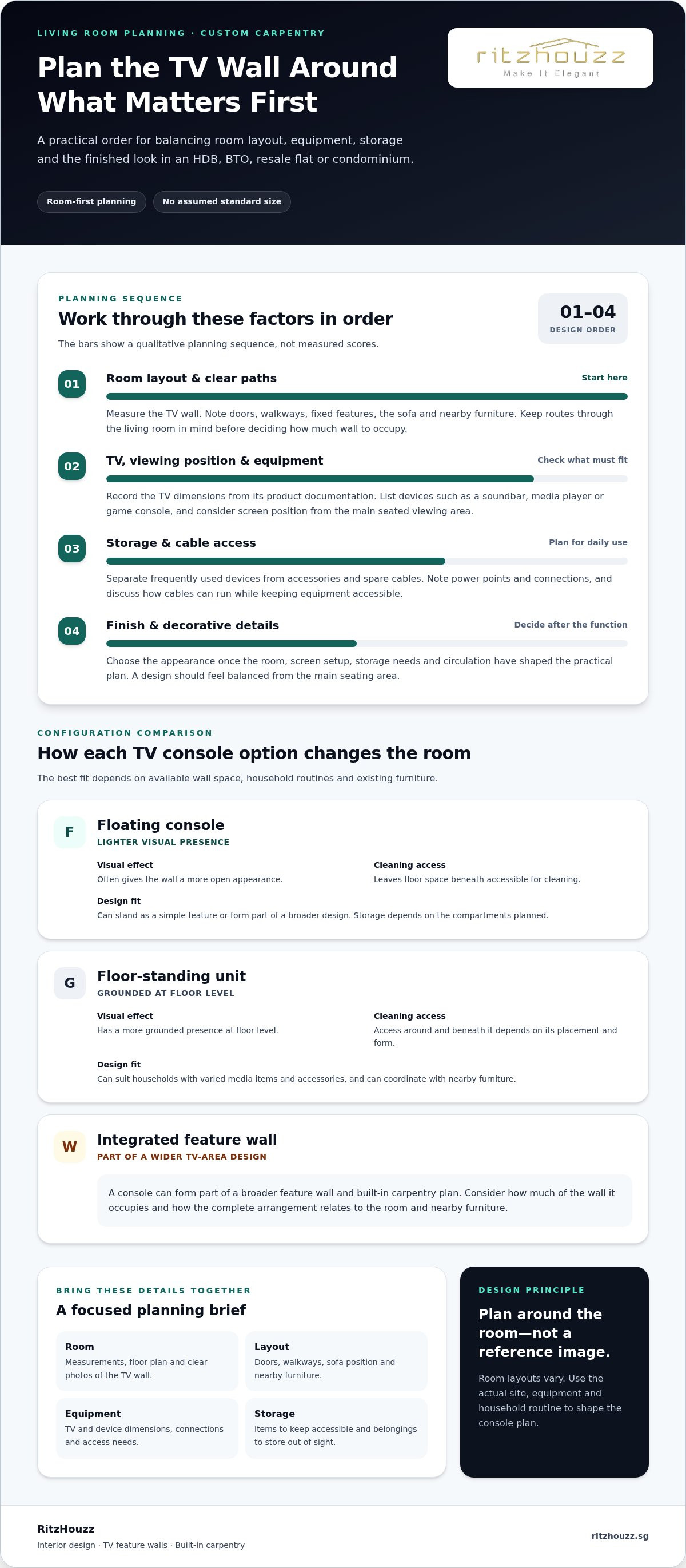
This guide explains how to plan a custom TV console around your room before settling on a design. You’ll learn which measurements to take, what to note about your TV and other equipment, and how to balance closed storage with an uncluttered look. We’ll compare standalone consoles with built-in carpentry and outline what to prepare for a tailored design discussion. These steps can help you make a more informed choice for your living room.
Key Takeaways
- Plan your console around the living-room layout, viewing setup and clear paths through the space before choosing its appearance.
- For custom TV console design Singapore, note your screen and equipment details early so the layout can account for cables and storage.
- Compare floating, floor-standing and integrated feature-wall options by how they affect visual weight, storage, cleaning access and the overall room design.
- Prepare room measurements, a floor plan, equipment details and storage priorities to make a design discussion more focused.
- RitzHouzz brings interior design and space planning together with TV feature walls and built-in carpentry for living-room planning.
Why Custom TV Console Design in Singapore Starts with the Living Room
A console should support the way your living room works, not simply fill the wall beneath the television. A custom TV console is planned around a particular room, its equipment and the way the household uses the space. Unlike an off-the-shelf unit, it can be planned around your layout and storage priorities instead of requiring the room to fit a fixed piece of furniture.
The console may hold media devices, keep everyday items out of sight or form part of a larger feature wall. The broader purpose of an Entertainment center is to organise a television and related equipment, but your brief should reflect what you actually use. For custom TV console design Singapore homeowners should start with the room, screen setup, storage and circulation, then consider finishes and decorative details.
What should a custom TV console solve?
Before discussing a design, list the equipment that needs a place, the items you want to store and the activities that happen in the living room. A household that regularly watches films may need space for a soundbar and media devices; another may use the room for reading, hosting guests or children’s play. Separate essential functions, such as accessible storage or a place for equipment, from preferences such as a particular look. This gives the design discussion practical priorities to work from.
How does the room shape the design?
Measure the TV wall and note nearby doors, walkways and existing furniture. A console that suits one layout may feel bulky or obstruct movement in another. HDB, BTO and resale-flat living rooms, as well as condominium layouts, vary, so don’t assume a standard size or arrangement will suit your home. Consider how people move between the seating area and the rest of the living space before deciding how much of the wall to occupy.
Note whether the sofa, dining area or other furniture affects the console’s position. The design should look balanced from the main seating area without narrowing a route through the room. For broader guidance on coordinating furniture placement and room use, explore this Singapore interior design guide.
Plan the TV, Storage and Cables Before Choosing a Console Style
Gather the details of your television and equipment before settling on cabinet proportions or finishes. The console needs to accommodate the items you use, allow practical access to connections and suit the available wall area. Planning these together helps avoid a design that looks tidy but leaves devices awkwardly placed or cables visible.
Which measurements and equipment details should you gather?
Start with the room, then check the equipment. Measure the available wall area and note nearby doors, windows, power points and other fixed features. Use product documentation to record the television’s dimensions, along with those of a soundbar, media player, game console or any other device you intend to place on or inside the console. Note how each item is used and where its connections need to remain accessible.
Clear photographs or a floor plan can show how the TV wall relates to the rest of the living room. Include the seating position and nearby furniture so the proposed arrangement can be considered in context. Think about the seated eye line and screen position when assessing viewing comfort. Cornell’s resource on ergonomic design principles offers broader guidance on arranging spaces around people’s use.
How can storage and cable planning reduce visual clutter?
Sort belongings by how often you need them. Frequently used devices may need to remain easy to reach, while accessories, spare cables or items used less often can go in closed storage. This distinction helps shape the cabinet arrangement around your household’s routine instead of adding compartments without a clear purpose.
Mark the locations of power points and equipment connections, then consider how cables could run between them and the TV or devices. Treat cable management as a design goal to discuss, not an assumed construction detail. The final approach depends on the room and equipment, so plan around the actual site rather than relying on a reference image.
For a focused planning discussion, share your measurements, floor plan or equipment details with RitzHouzz’s interior design and carpentry team. This helps connect the console to the wider TV feature wall and built-in carpentry plan.
Compare Floating, Floor-Standing and Feature-Wall TV Console Designs
Each configuration makes a different trade-off between visual openness, storage and how the TV area relates to the rest of the living room. None is automatically the right choice. For custom TV console design Singapore homeowners should compare the options against their available wall space, household routines and existing furniture, rather than choosing the most elaborate design by default.
| Configuration | Visual weight | Storage approach | Cleaning access | Design integration |
|---|---|---|---|---|
| Floating console | Often gives the wall a lighter, more open appearance. | Storage is defined by the console’s planned compartments. | Leaves floor space beneath accessible for cleaning. | Can sit as a simple feature or form part of a broader design. |
| Floor-standing unit | Has a more grounded presence at floor level. | Can suit households with varied media items and accessories. | Cleaning around and beneath it depends on its placement and form. | Can coordinate with nearby furniture without covering the full wall. |
| Integrated feature wall | Creates a broader, more prominent focal area. | Console storage can be planned as part of the overall composition. | Access depends on the final layout and cabinet arrangement. | Connects the TV area with built-in carpentry and the room’s interior. |
When might a floating console suit the room?
A floating design may suit a room where you want the floor beneath the console to remain visible and accessible for cleaning. It can also keep the TV wall visually restrained, particularly if a larger unit might feel dominant. Include the wall and mounting approach in the design discussion, since suitability depends on the actual room and arrangement. Storage still matters, so decide which items need a home before prioritising a lighter appearance.
When should you consider a floor-standing unit or feature wall?
A floor-standing unit may be a practical option if your household has several media items or accessories to organise. An integrated feature wall takes a wider view, coordinating the TV area with built-in carpentry and the surrounding interior. A larger design isn’t automatically better: if it overwhelms the wall or competes with nearby furniture, a simpler console may feel more balanced. Resources on wood craftsmanship and design can offer further context on how design choices contribute to a whole composition.
When comparing concepts, look at the full wall and its relationship to the room, not only the space behind the screen. The most suitable option supports how you use the living area and keeps its visual scale in harmony with the surroundings.
Prepare for a Custom TV Console Enquiry with a Room-Planning Checklist
A useful design brief turns a general idea into a discussion grounded in how your household uses the living room. For custom TV console design Singapore homeowners can prepare practical details in advance, then assess whether a proposed arrangement suits the room rather than focusing on appearance alone.
What should you include in your design brief?
Gather the essentials before discussing finishes or form:
- 1. Room measurements: Note the TV wall and relevant openings or fixed features that could affect the layout.
- 2. Floor plan and photographs: Share a floor plan if available, along with clear room views showing existing furniture and how people move through the space.
- 3. Equipment details: List the TV and other media items, with dimensions taken from their product documentation.
- 4. Storage priorities: Identify what needs to be stored, what should remain accessible and which items are used only occasionally.
Also note your preferred visual direction. A finish reference or image can help communicate the look you have in mind, but use it as inspiration rather than a fixed specification. Be clear about what is essential, such as accessible equipment or concealed everyday clutter, and what can be adapted to the room. This keeps the discussion centred on your household’s needs.
To discuss a tailored design, share your room requirements, measurements or floor plan with RitzHouzz.
How do you assess a proposed design?
Review the concept against your brief, not just its finish or overall impression. Check that it accounts for the TV and equipment, puts storage in the right places, considers cable routes and keeps circulation through the living room clear. Then look at the full composition: does the console feel in proportion with the TV, wall and surrounding furniture, or does it dominate the room?
Ask for a clear explanation of the design choices and what the proposed project includes. For example, consider how the storage arrangement responds to your priorities and how the TV area relates to any feature-wall or built-in carpentry plans. A focused brief makes these details easier to discuss and compare, helping you choose a design that is practical as well as considered.
Plan Your Custom TV Console with RitzHouzz Interior Design and Carpentry
A TV console works best when it belongs to a considered living-room plan rather than being designed in isolation. RitzHouzz offers interior design and space planning alongside TV feature walls and built-in carpentry, bringing the TV area into the wider room plan. Start with practical details: the available space, your equipment, storage priorities and how you want the living room to function.
How can a TV console fit the wider living-room plan?
Consider the console alongside the sofa, walkways and other furniture. Its position and visual scale should make sense from the main seating area without making routes through the room awkward. In a compact HDB or BTO living room, a restrained console may preserve a sense of openness; in another layout, a feature wall could organise the TV area and connect it with built-in storage. The right balance depends on the home, not a standard template.
Seating also influences how the TV wall is experienced. Consider the relationship between the screen, sofa and available circulation before deciding how much of the wall the console or feature treatment should occupy. For more ideas on coordinating the seating area with the rest of the interior, read the luxury sofa interior design guide.
What is the next step for a tailored design discussion?
Bring together the information that best describes your space and priorities. A floor plan shows the room layout, while measurements and photographs help communicate the TV wall and nearby furniture. Include notes on equipment, storage and visual preferences, and identify what matters most if you need to make trade-offs. These details give the design conversation a useful foundation.
For custom TV console design Singapore homeowners can begin by discussing the room itself. RitzHouzz’s interior design and carpentry services consider the home, its equipment and the household’s storage needs as part of the wider living-room composition. Share your floor plan, measurements, photographs or requirements to discuss a custom TV console design.
Shape a TV Wall That Works for Your Home
A well-planned console starts with the living room, not a style reference. Measure the space, note your TV and equipment, and clarify what needs to be stored before comparing a floating console, floor-standing unit or feature wall. The right custom TV console design Singapore homeowners choose should suit the room, support everyday use and sit comfortably alongside the rest of the interior.
RitzHouzz offers interior design consultancy and space planning, together with TV feature walls and built-in carpentry. Share your floor plan, measurements or requirements to discuss your custom TV console design and consider how the TV area can fit the wider living-room plan.
With the room and its needs guiding the decisions, you can move forward with a design that feels thoughtfully arranged.
Frequently Asked Questions
What should I consider when choosing a custom TV console design in Singapore?
Start with your living room’s layout and how your household uses it. Measure the TV wall, consider nearby doors and walkways, and note your screen, soundbar and other equipment. Then list what needs storage and what should stay accessible. A well-planned custom TV console design Singapore homes can benefit from should suit the room’s proportions, support comfortable viewing and leave enough space to move around.
Is a floating TV console better than a floor-standing console?
Neither option is always better. The right choice depends on your room, wall conditions and storage needs. A floating console leaves the floor beneath it visible, which may make the TV area feel lighter and ease cleaning access. A floor-standing unit has a grounded presence and may suit households with more items to store. Consider how each option fits the surrounding furniture and everyday use.
How do I measure for a custom TV console?
Measure the available wall area and note nearby doors, windows, sockets and other fixed features. Also consider where the sofa sits and whether the console could affect circulation. Record the TV and equipment dimensions from their product documentation, since screen size alone doesn’t describe the full setup. A floor plan and clear room photographs can help explain the layout. Final design measurements should respond to the actual room.
Can a custom TV console include storage and cable management?
Yes. The design can be planned around the equipment you use, the items you want to store and access to sockets and connections. Frequently used devices may need to remain reachable, while accessories used less often could be placed out of sight. Discuss cable routes as part of the design, alongside the cabinet arrangement. The storage and cable plan should be tailored to the room and equipment.
Should I choose a TV console or a full feature wall?
Choose a standalone console if you want the TV area to remain more contained or prefer not to make the whole wall a focal point. Consider a feature wall if you want the console and built-in carpentry to form a more integrated composition. A larger treatment isn’t automatically better. Compare its scale with the available wall and surrounding furniture, and consider whether it supports your storage needs without overwhelming the room.
What information should I send for a custom TV console enquiry?
Share the room measurements, a floor plan if available, and photographs showing the TV wall and nearby furniture. Include the TV and equipment dimensions, essential storage needs and preferences for the console’s appearance. It also helps to describe walkways or furniture placement the design should account for. These details give the design discussion a clear starting point.
Disclaimer
The information in this article is provided for general guidance only and is intended to help readers make informed decisions about mattresses, furniture, renovation, carpentry and related home solutions. Product specifications, prices, promotions, availability, warranties and services may change without notice. Actual colours, materials, dimensions and comfort may vary from images or descriptions. For renovation, carpentry or space-planning projects, final recommendations, measurements, scope of work and quotations should be confirmed directly with RitzHouzz before proceeding. Mattress comfort and suitability are subjective, and any health-related information is general in nature and should not be treated as medical advice. Please contact RitzHouzz or visit our showroom for the latest product and service information.