

Coffee Table Fit Guide for Your Sofa in Singapore
The largest coffee table isn’t always the best match for your sofa. In a compact Singapore living room, a table that looks balanced can still make it difficult to walk past or reach the sofa comfortably. If you’re planning a custom sofa Singapore home needs, consider the table and room layout together rather than treating the sofa as a separate decision. Proportions and clearance matter just as much as appearance in daily use.
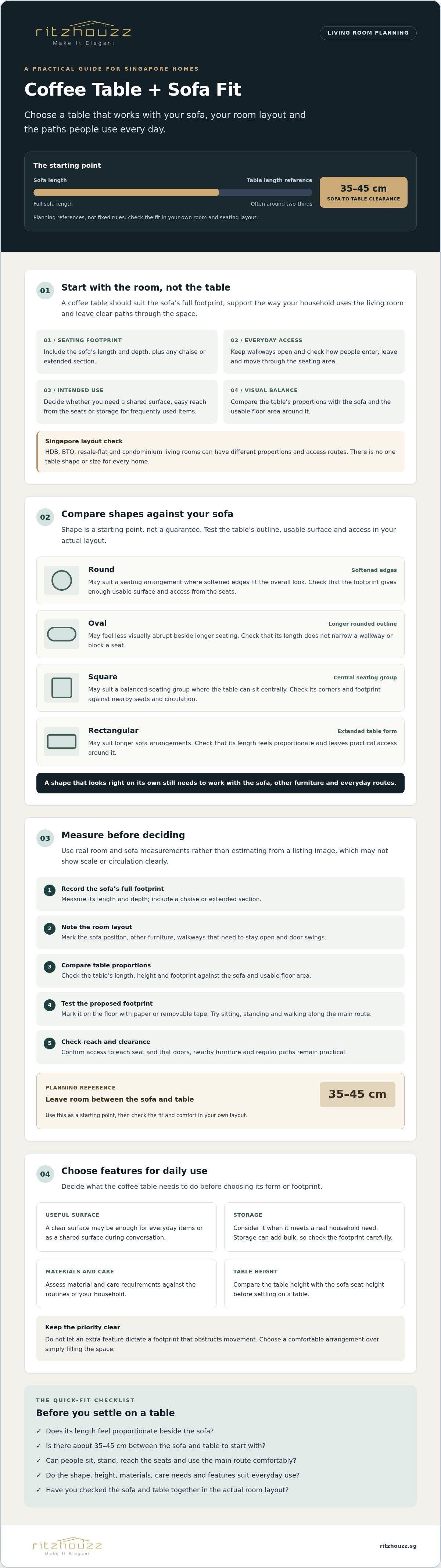
This guide compares round, oval, square and rectangular tables, along with size, materials, care and practical features such as storage. As a starting point, a coffee table is often around two-thirds the sofa’s length, with about 35-45 cm of clearance between the two. You’ll also learn what to measure, from the sofa’s full footprint to the routes people use through the room, and what details to share when planning a made-to-measure sofa. With those measurements in hand, you can choose a table that suits your seating and keeps the living room easy to use.
Key Takeaways
- Choose a coffee-table shape by considering your sofa’s footprint and the routes people use to move through the living room.
- Compare table length, height and footprint with your sofa before deciding which shape suits the layout.
- Assess materials, care requirements and useful features against your household’s everyday routines.
- Measure your room, sofa and access routes, taking your HDB, BTO, resale-flat or condominium layout into account.
- When planning a custom sofa for your Singapore home, share accurate room measurements and layout requirements so the sofa and table can be considered together.
Choosing a Coffee Table for Your Sofa Starts with the Room
Choose a coffee table that suits the sofa’s footprint, supports the way your household uses the living room and leaves clear paths through the space. A table may look appealing on its own, but it also needs to work alongside the sofa, nearby furniture and the routes people use every day.
Start with four considerations: the sofa’s full footprint, access around the seating, the table’s intended use and the visual balance between the two pieces. An HDB or BTO living room can have different proportions and access routes from a condominium layout, so there isn’t one table shape or size that fits every home. Aim for a comfortable arrangement rather than simply filling the space.
A coffee table can hold everyday items, give people a shared surface during conversation and help define the seating area. The table’s history and changing role are explored in this overview of the history of the coffee table. For your own room, distinguish essential functions from optional ones. A clear surface may be enough; storage is useful if it meets a real household need. Don’t let an extra feature dictate a footprint that obstructs movement.
What should a coffee table do beside a sofa?
Think about who uses the seating and what they need within reach. If the table is mainly for everyday items, prioritise convenient access from the seats. If it brings people together during conversation, consider whether everyone can comfortably reach it. Storage may help organise frequently used items, but it can add bulk. Decide on the function first, then look for a form that suits the room.
Which room details should you consider first?
Note where the sofa sits, which walkways need to stay open, how doors swing and where other furniture is placed. Household routines matter too: consider how people enter the seating area, pass through the living room and use the table. Measure the room and sofa rather than estimating from a listing image, which may not show scale or circulation clearly.
As a starting point, the table is often around two-thirds the sofa’s length, with about 35-45 cm between the table and sofa. Treat these as planning references, then check the fit in your own layout. Mark the proposed table footprint on the floor to see whether there’s enough room to move and sit comfortably.
If you’re considering a custom sofa Singapore households can plan around, settle the room layout and measurements before confirming the sofa’s footprint. This makes it easier to assess the coffee table as part of the seating arrangement. Explore sofas for your living room as you compare options.
Match Coffee Table Size and Shape to Your Sofa
Compare the coffee table with the sofa’s actual length, seat height and full footprint, including any chaise or extended section. A table that looks well-proportioned beside a straight sofa may crowd an L-shaped arrangement, while a smaller table can feel lost in front of a long seating run. Measure the sofa and usable floor area before choosing table proportions.
Which coffee-table shape works with different sofa layouts?
Use shape as a starting point, not a guarantee. The table below highlights what to test against your seating and room:
| Shape | May suit | Check in your room |
|---|---|---|
| Round | Seating arrangements where softened edges suit the overall look. | Whether its footprint provides enough usable surface and access from the seats. |
| Oval | Longer seating where a rounded outline may feel less visually abrupt. | Whether its length fits without narrowing a walkway or blocking a seat. |
| Square | A balanced seating group where the table can sit centrally. | Whether the corners and overall footprint work with nearby seats and circulation. |
| Rectangular | Longer sofa arrangements that can accommodate an extended table form. | Whether the table length feels proportionate and leaves practical access around it. |
These are possibilities to test, not fixed pairings. For a closer look at how finishes influence a table’s appearance, browse this overview of coffee table materials and styles.
How can you check table proportions before buying?
Measure the sofa’s full width and depth, then mark the proposed table footprint on the floor with paper or removable tape. Try sitting down, standing up and walking along the main route through the living room. Check doors, nearby furniture and access to each seat. If the table obstructs a regular path, reconsider its shape or footprint before purchasing.
Compare the table height with the sofa seat height, then confirm the table’s measurements in its product specifications. A table can look suitable in a photograph yet feel awkward beside your sofa. Keep the room’s usable floor area in view, especially in compact HDB, BTO or condominium living rooms.
If you’re planning a custom sofa Singapore home layouts can accommodate, confirm the sofa dimensions alongside the intended table area. Browse sofas for different living-room layouts or discuss your sofa requirements with RitzHouzz.
Coffee-Table Materials and Features: What Matters in Daily Use?
A coffee table should suit the room visually and make sense for the way you live. Rather than assuming one material is best for Singapore’s warm, humid climate, compare how each option looks in your space and ask what care the specific product requires. The right choice depends on your household routines, comfort with upkeep and the atmosphere you want beside the sofa.
How should you compare table materials?
Consider how colour, texture and visual weight relate to the sofa and the rest of the living room. A wood finish may bring a warmer note; glass can appear visually lighter, while stone or marble may make a stronger visual statement. These are aesthetic impressions, not guarantees about a particular product’s weight, durability or maintenance.
Ask the retailer for care guidance for the exact material and finish, including how to handle everyday marks or spills. If the table combines materials, check the care advice for each part. A finish that looks appealing in a showroom may read differently at home, so compare it with the sofa upholstery and surrounding colours where possible. The sofa and table don’t need to match exactly. A considered contrast in tone or texture can coordinate the pieces without making them look like a set.
Do storage and shape features improve everyday usability?
Storage is useful if it gives frequently used living-room items a practical place to go. Think about what you would store and whether you can reach it easily from the sofa. If you rarely need extra storage, a simpler table may better suit your routine and leave the seating area feeling less crowded.
Inspect the details in person if possible. Check whether the edges feel comfortable for your household, whether the table feels stable in ordinary use and whether drawers, lids or other moving parts are easy to access. Ask how those features operate and what care they require. Don’t assume from a product image that a mechanism or construction will suit your needs.
- For a busy living room: Consider how easily people can approach the table and access its surface.
- For a household that values order: Decide whether storage solves a real need before accepting a larger footprint.
- For a coordinated interior: Compare tones and textures rather than trying to match the sofa finish exactly.
As you plan a custom sofa Singapore home can accommodate, consider the table’s finish and features alongside the sofa’s upholstery, not as a reason to force an exact match. Explore sofa styles for your living room while deciding which combination feels right.
A Singapore Home Measurement Checklist for Sofa-and-Table Fit
Measure the room, sofa, intended table area and access routes before comparing options. In an HDB, BTO, resale flat or condominium, the layout and entry constraints can affect where furniture fits and how it can be brought into the home. Keep the measurements together so you can compare them with confirmed product dimensions rather than relying on visual estimates.
What should you measure before comparing tables?
Use this checklist to build a practical picture of the space:
- 1. Room layout: Record the living room’s usable length and width, noting fixed features and areas that must remain accessible.
- 2. Sofa placement: Measure the sofa’s full footprint, including a chaise or extended section, and mark where it sits in the room.
- 3. Access routes: Note the walkways people use, nearby doors and the space needed to reach each seat. Measure relevant entry points and routes, such as the home entrance and any turns along the way, if they may constrain furniture dimensions.
- 4. Table footprint: Write down the length, width and height of each table you’re considering. Compare its footprint with the sofa and the room’s usable floor area.
Record measurements in one consistent unit and label what each figure refers to. Check that product dimensions describe the full item, not just its top. If details are unclear, ask the retailer to confirm the measurements before deciding.
How can a floor plan help you test the layout?
A simple sketch can reveal conflicts that are easy to miss when looking at furniture separately. Draw the room, sofa, doors and nearby furniture, then outline the table footprint. Try a second position or table shape if the first arrangement makes a main walkway feel tight or blocks comfortable access to a seat.
For a more immediate check, mark the table outline on the floor with removable tape. Walk the routes you use each day and sit down in each place. Consider whether the layout still works when the room is in use, not only when everything is neatly arranged.
If you’re planning a custom sofa Singapore home can accommodate, bring your room and access measurements into the discussion. If the layout is uncertain, RitzHouzz’s interior space-planning services can help you think through the arrangement. Discuss your sofa requirements with RitzHouzz.
Coordinate Your Coffee Table with a Custom Sofa Plan
Plan the room first, confirm the sofa’s footprint next, then choose a coffee table based on its function and form. This sequence connects the table decision to how the living room needs to work, rather than treating each piece as a separate purchase. It also helps you assess whether the sofa leaves enough usable space for the table and everyday movement.
Made-to-measure sofa planning may be worth exploring if standard options don’t suit a particular room or seating arrangement. You may have a specific layout requirement or need to consider how the sofa relates to nearby furniture and access routes. Customisation gives you a way to discuss those requirements, but the available options and final dimensions should be confirmed directly. Don’t assume a configuration will fit until the details have been reviewed.
For a starting point, browse the RitzHouzz sofa collection and compare the options with your room plan. As you shortlist, consider the coffee table as part of the same seating arrangement. Its surface, shape and footprint should support how you use the space without dictating a sofa choice that doesn’t meet your needs.
When is a custom sofa worth considering?
Consider a custom sofa if an off-the-shelf option doesn’t appear to address your room or layout requirements. Before enquiring, gather your room measurements, note where the sofa will sit and describe how you intend to use the seating area. This gives you a clearer basis for discussing what may be possible. Confirm the available customisation options with RitzHouzz rather than assuming a particular size, material or configuration can be provided.
What information should you bring to a sofa enquiry?
Prepare a concise brief with the details that affect the decision:
- Room measurements and a floor plan, if available.
- Your preferred sofa arrangement and where it would sit.
- How the household uses the living room, including regular access to seats and walkways.
- Any entry or access constraints that could affect bringing furniture into the home.
- The coffee table’s intended position and the space you want to preserve around it.
Clear information helps focus the discussion, though dimensions and customisation options still need to be confirmed with the team. For related room-planning ideas, consult a dedicated interior-design guide alongside your measurements. To discuss your sofa requirements and confirm which options may be suitable, contact RitzHouzz about your sofa plans.
Bring Your Sofa and Coffee Table into Balance
A coffee table works best when its size, shape and features suit both the sofa and the room around them. Measure the sofa and usable floor area, check access routes, then compare table options against your household’s routines. Material and storage choices should reflect the care you’re comfortable with, rather than simply matching the sofa’s finish.
If standard seating options don’t appear to meet your layout needs, discussing a custom sofa Singapore households can plan around may help clarify what to consider. RitzHouzz offers sofas, including custom and made-to-measure options, as well as interior design consultancy and space-planning services. Bring your room measurements or floor plan and describe how you use the living area so the conversation can focus on your requirements.
Contact RitzHouzz to discuss your sofa requirements. You can also visit the showroom to compare sofa options in person. Bring your measurements or floor plan to make the discussion more useful.
Frequently Asked Questions
How do I choose a coffee table that fits my sofa?
Choose a coffee table by comparing its length, height and footprint with your sofa and the room’s usable floor area. Measure the full sofa, including any chaise or extended section, then mark the table’s proposed position on the floor. Check that people can reach the seats and move through the room comfortably. Finally, consider how the table will be used and whether its shape suits the overall arrangement.
Should a coffee table be higher or lower than the sofa seat?
Compare the coffee-table height with the sofa seat height and consider what feels comfortable to reach from your usual sitting position. There isn’t a single height relationship that suits every sofa and household. Check the measured height of both pieces, along with the table’s product specifications, before deciding. If possible, test the reach beside a similar seat or view the table with the sofa to judge whether the arrangement works for you.
What shape coffee table works best with an L-shaped sofa?
No single shape suits every L-shaped sofa. A round or oval table may soften the arrangement’s lines, while a rectangular table can align with a longer seating section. A square table is another option if the seating group and available floor area allow it. Compare each shape with the sofa’s full footprint, then check seat access and walkways. Marking the proposed outline on the floor can help you judge the fit.
How much space should I leave around a coffee table?
Leave enough room to approach the sofa, use the table and keep the main route through the living room clear. As a planning reference, allow about 35-45 cm between the sofa and table, but treat this as a starting point rather than a fixed requirement. The best clearance depends on your furniture and circulation paths. Test the arrangement in your room and adjust if it feels awkward to pass or sit down.
Which coffee-table material is suitable for a Singapore home?
Choose according to the look you prefer, your household routines and the care requirements of the specific table. Wood, glass, stone and mixed-material designs create different visual effects, but no one category is automatically best for every Singapore home. Ask the retailer how to care for the exact material and finish, especially if spills or frequent use are part of daily life. Consider how its colour and texture relate to your sofa without requiring an exact match.
Can I choose a coffee table before finalising a custom sofa?
You can shortlist a coffee table first, but confirm the sofa’s planned footprint and seat height before making a final choice. The table should work with the seating and preserve comfortable circulation, so decisions made separately may need revisiting. If you’re planning a custom sofa Singapore home can accommodate, share the room measurements and intended table area when discussing sofa requirements. Confirm available customisation options directly with the retailer.
What should I measure before buying a coffee table for an HDB or condo living room?
Measure the living room’s usable area, the sofa’s full footprint, nearby furniture, walkways and the intended table space. Note doors, entry points and any access constraints that may affect bringing furniture into the home. Keep the measurements together and compare them with confirmed product dimensions. A simple floor plan or tape outline can help you test whether the table leaves clear routes and comfortable access to the sofa in your specific HDB or condominium layout.
Disclaimer
The information in this article is provided for general guidance only and is intended to help readers make informed decisions about mattresses, furniture, renovation, carpentry and related home solutions. Product specifications, prices, promotions, availability, warranties and services may change without notice. Actual colours, materials, dimensions and comfort may vary from images or descriptions. For renovation, carpentry or space-planning projects, final recommendations, measurements, scope of work and quotations should be confirmed directly with RitzHouzz before proceeding. Mattress comfort and suitability are subjective, and any health-related information is general in nature and should not be treated as medical advice. Please contact RitzHouzz or visit our showroom for the latest product and service information.